.png)
The Backchannel
What is a buying signal in B2B sales?
Featured Blog


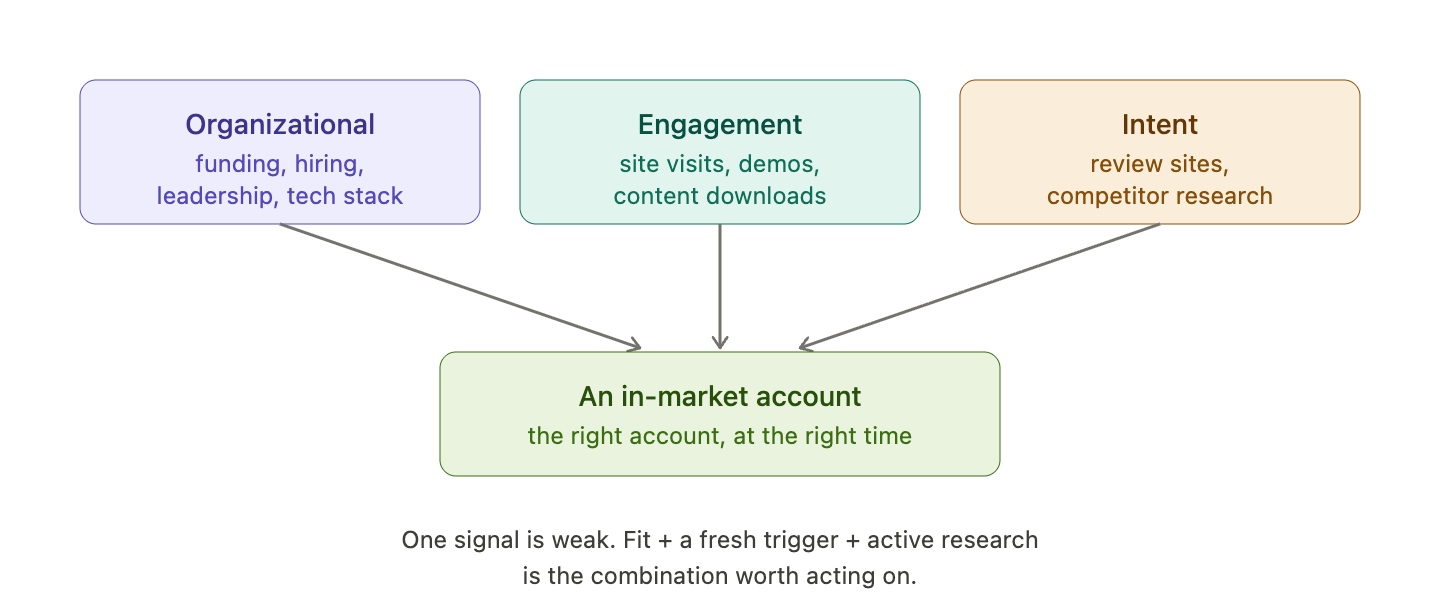
A buying signal is any observable action or change that suggests a company or person may be moving toward a purchase. In B2B sales, signals fall into three broad groups: organizational changes (like new funding, leadership hires, or a tech-stack switch), engagement behavior (like visiting your pricing page or requesting a demo), and third-party intent (like researching your category on review sites). Tracked together, buying signals tell a sales team which accounts are worth contacting and, just as importantly, when.
The reason signals matter so much in 2026 is that the buying decision is now largely formed before a vendor ever knows the buyer exists. Most of a B2B purchase happens during an anonymous, self-directed research phase and by the time a buyer raises their hand, their preferences are often already set. Buying signals are how sellers find those buyers earlier, while there's still a decision to influence.
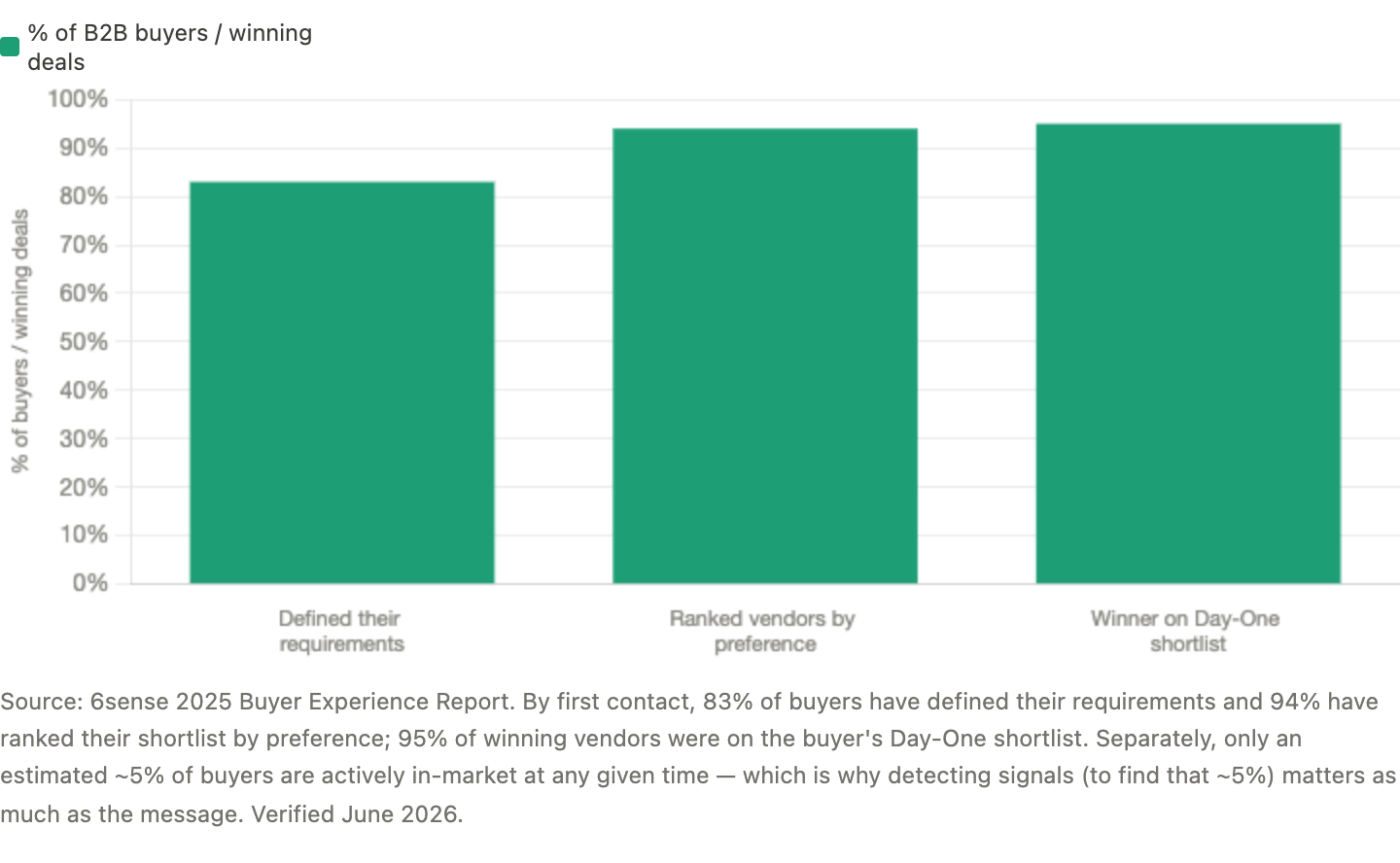
The data on this is stark. According to 6sense's 2025 research, by the time a buyer makes first contact with a vendor, 83% of B2B buyers have already defined their purchase requirements before they engage with a sales representative. Worse for late sellers: 6sense found that 94% rank their shortlist vendors by preference before contacting any of them, and 95% of winners are on the buyer's Day One shortlist. If you're not visible or not reaching out during the research phase, you're usually competing for a deal that's already been quietly decided.
The three main types of buying signals
Not all signals mean the same thing. The strongest sales teams group them into three categories, because each answers a different question about an account.
Organizational signals are changes in a company's situation: a new funding round, a hiring spike for a relevant role, a leadership change, a merger or acquisition, expansion into a new market, or a switch in their technology stack. These signals suggest a company's needs are changing often before the company itself has started shopping.
Engagement signals are first-party behaviors you can see in your own systems: visits to your pricing page, a demo request, repeated content downloads, email opens and clicks, or a return visit to your site. These signals suggest interest the account is paying attention to you specifically.
Intent signals are third-party research behaviors happening out on the web: an account researching your category on review sites like G2, comparing competitors, or generating a surge of topic activity across publications. These signals suggest an account is in-market actively evaluating, even if not yet talking to you.
The art of signal-based selling is combining them. One signal alone is weak; an account that fits your profile, just raised funding, and is researching your category is a far stronger bet than any single trigger on its own.
First-party vs. third-party signals
A distinction worth understanding, because it determines what you can see and how you'd act:
The most complete picture comes from combining them: third-party intent surfaces accounts you didn't know were looking, and first-party engagement tells you which of those have started paying attention to you specifically.
How to act on buying signals
Detecting signals is only useful if it changes what you do. A practical signal-based motion looks like this: define the profile of a company worth selling to, monitor for the organizational, engagement, and intent signals that matter for your product, prioritize the accounts showing the strongest combination of fit and signal, and reach out with a message that references the actual context not a generic template. The timing advantage is the whole point. Reaching a well-matched account in the window when it's showing signals is dramatically more effective than the same message sent cold, because you're arriving while the decision is still being formed rather than after it's been made.
This is exactly the problem Backchannels is built for. As a buyer database with buying signals layered on top, it lets you define your ideal customer profile, find the companies that genuinely fit, and see which of them are showing signals of being in-market right now so your outreach lands during the research phase, while there's still a shortlist to get onto.
Frequently asked questions
What is an example of a buying signal?
A company posting a job for a role your product supports, a prospect visiting your pricing page twice in a week, or an account researching your category on a review site are all buying signals. The strongest cases combine more than one.
What's the difference between a buying signal and intent data?
Intent data is one type of buying signal specifically, third-party research behavior that suggests an account is in-market. "Buying signal" is the broader term that also includes organizational changes and first-party engagement.
Why are buying signals important in B2B sales?
Because most of the buying decision now happens before a vendor is contacted 83% of buyers define requirements and 94% rank vendors before first contact. Signals let sellers reach buyers earlier, during the research phase, when the decision can still be influenced.
How do you track buying signals?
First-party signals are tracked in your CRM, marketing platform, and product analytics. Third-party intent and organizational signals are typically tracked through a buyer database or signals platform that monitors the wider web for funding, hiring, tech-stack changes, and category research.
TRY BACKCHANNELS FREE
Your next customers are already in the database.
Backchannels gives you 225,000 verified software decision-makers. Filter to your exact ICP, preview matches for free, and push them straight into Salesforce or HubSpot. Pay per contact. No subscription, no contract.
Browse contacts freeNo credit card. Preview before you spend a credit.
No items found.
Final Thoughts
Published
September 10, 2026
Writer
Joe Backchannels
Share


Most Wanted