.png)
The Backchannel
10 Companies With Sales Playbooks You Can Learn From
Featured Blog


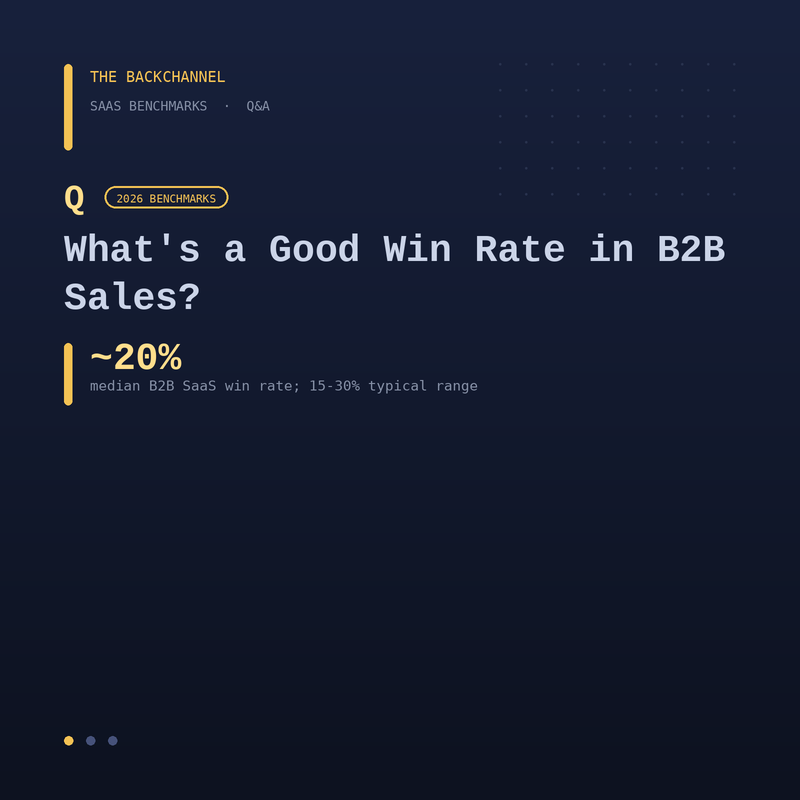
A sales playbook is the difference between a team that performs consistently and one that depends on a few stars having good months. It's the documented set of plays how you target, how you qualify, how you handle objections, how you move a deal forward that turns individual talent into a repeatable system. The best sales organizations don't leave success to chance or charisma; they codify what works and make it teachable.
What's worth studying isn't any single play, but the discipline of building a playbook at all. Most teams operate on tribal knowledge: the best reps know what works, but it lives in their heads and walks out the door when they leave. The companies below turned that knowledge into systems, which is why their sales motions scale and their new hires ramp faster. The specific plays vary, but the underlying commitment to codifying success is the lesson.
Below are ten companies whose sales playbooks are worth learning from, the core idea that makes each one effective, and how you can apply the thinking to your own team. At the end, I'll cover the foundation that every good playbook depends on knowing exactly who to run the plays on and how we think about that at Backchannels.
1. Salesforce
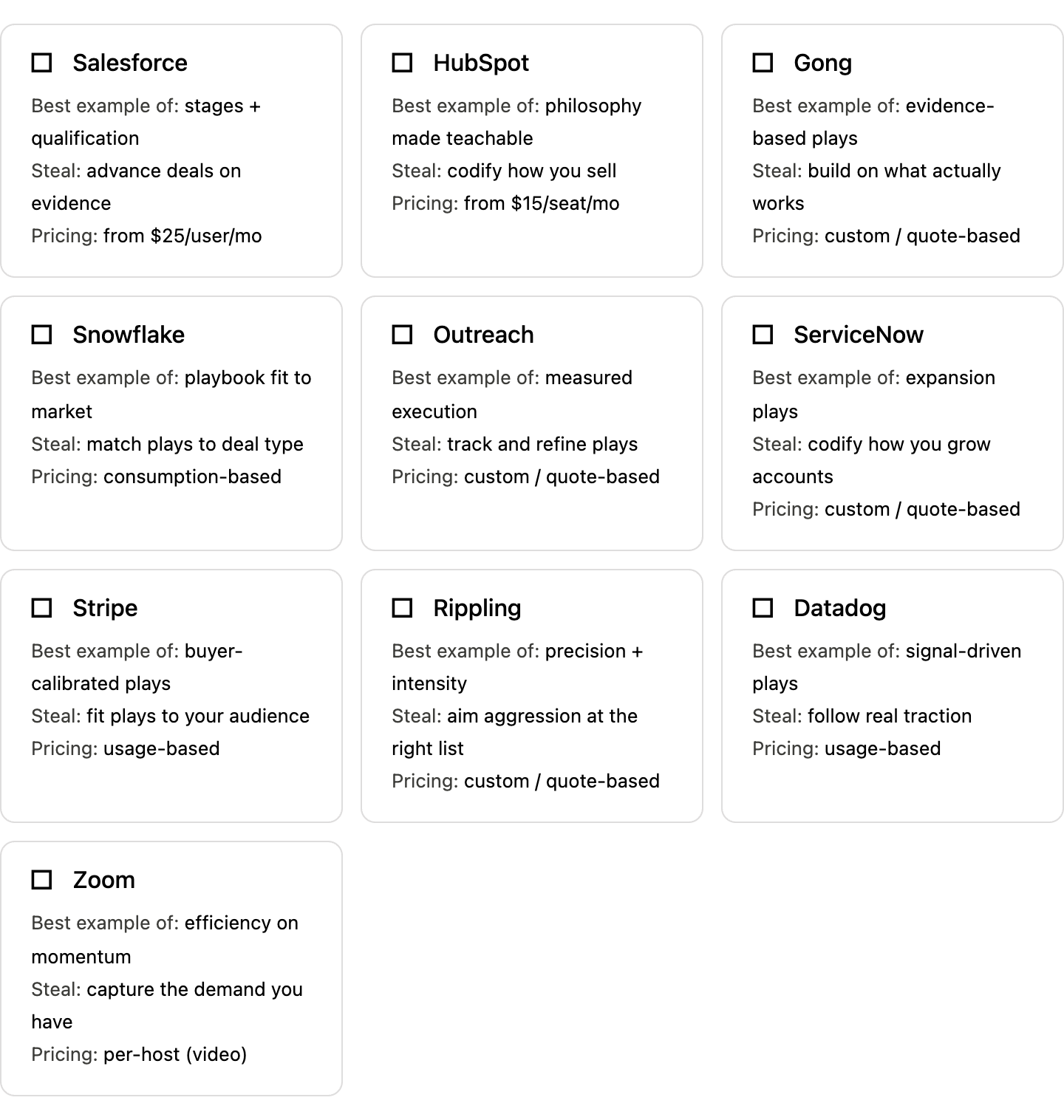
Salesforce essentially wrote the modern enterprise sales playbook, and its discipline around process is the reason. The company built repeatable stages, clear qualification criteria, and a structured methodology that could be taught to thousands of reps. The playbook turned enterprise selling from an art practiced by a few into a system executable at scale.
What makes Salesforce instructive is the rigor of its process. Every stage of the deal has defined criteria for what qualifies a prospect to advance, which prevents reps from advancing deals on optimism rather than evidence. That structure is what allows a massive sales organization to perform consistently rather than depending on individual judgment.
The takeaway for your team is to define clear stages and qualification criteria for your deals. A playbook where everyone knows what must be true for a deal to advance keeps your pipeline honest and your forecasting accurate. Structure isn't bureaucracy it's what makes a sales motion repeatable and teachable.
2. HubSpot
HubSpot built a playbook around a consultative, inbound-aligned sales motion that scales. Its reps are trained to act as advisors, focusing on the prospect's goals and challenges rather than pushing product, and the company codified this approach so it could be taught consistently across a growing team. The playbook made "be helpful" into a repeatable method.
What's worth studying is how HubSpot turned a philosophy into a teachable system. "Be consultative" is easy to say and hard to scale, but HubSpot built training, frameworks, and plays that made the consultative approach concrete and repeatable. The playbook ensured that helpfulness wasn't dependent on individual rep instinct but was baked into how everyone sold.
For your team, the takeaway is to codify your sales philosophy into concrete, teachable plays. If you believe in a consultative approach, document what that actually looks like the questions to ask, the way to frame conversations, the mindset to bring. Turning a philosophy into a system is what lets it scale beyond your best reps.
3. Gong
Gong has an unusual advantage in building its playbook: it analyzes sales conversations for a living, so its plays are grounded in data about what actually works. Rather than relying on conventional wisdom, Gong can see which behaviors correlate with won deals and build its playbook around evidence. The result is a sales motion informed by what genuinely drives results.
What makes Gong instructive is the data-driven foundation of its playbook. Most sales advice is based on intuition or tradition, but Gong builds its plays on observed patterns from real conversations. This means its playbook reflects what actually works rather than what people assume works, which is a meaningfully different and more reliable basis.
The takeaway for your team is to ground your playbook in evidence wherever you can. Pay attention to what actually correlates with your won deals the behaviors, the messaging, the approaches and build your plays around those patterns. A playbook based on what genuinely works will always outperform one based on assumptions.
4. Snowflake
Snowflake built a playbook for complex, high-value enterprise deals, and its plays reflect the realities of that environment. The playbook emphasizes account focus, multi-threading across stakeholders, and the patience required for long sales cycles. It's a system designed specifically for the challenges of selling sophisticated technology to large organizations.
What's worth studying is how Snowflake's playbook matches its market. The plays aren't generic they're built for the specific dynamics of enterprise deals, where many stakeholders are involved and cycles are long. This fit between the playbook and the actual selling environment is what makes it effective; a high-volume playbook would fail in this context, and Snowflake's playbook would be overkill for simple transactional sales.
The takeaway for your team is to build a playbook that fits your specific selling environment. The right plays depend on your deal size, your sales cycle, and your buyers. Don't copy a generic playbook build one matched to the actual dynamics of how your deals work, the way Snowflake built for enterprise complexity.
5. Outreach
Outreach, as a sales engagement company, built a playbook centered on disciplined, systematic execution of multi-touch sequences. Its plays emphasize consistency, structure, and continuous measurement treating outbound as a system to be refined rather than a set of activities to improvise. The playbook reflects an operational approach to sales.
What makes Outreach instructive is the emphasis on systematic execution and measurement. The playbook isn't just a set of plays; it's a system for running those plays consistently and improving them based on data. This operational discipline is what turns a sales motion into something that gets better over time rather than staying static.
For your team, the takeaway is to build measurement and iteration into your playbook. Don't just document your plays track how they perform and refine them based on results. A playbook that's continuously measured and improved becomes sharper over time, while a static one slowly drifts out of date.
6. ServiceNow
ServiceNow built a playbook around landing in enterprise accounts and expanding methodically over time. Its plays emphasize delivering value in an initial deployment and then systematically growing the relationship across departments and use cases. The playbook is designed for long-term account development, not just initial wins.
What's worth studying is how ServiceNow's playbook treats the sale as an ongoing relationship rather than a one-time transaction. The plays for expanding within an account are as developed as the plays for landing it, reflecting an understanding that enterprise growth comes largely from deepening existing relationships. The playbook codifies the expansion motion, not just the acquisition motion.
The takeaway for your team is to build plays for expansion, not just acquisition. Document how you'll grow accounts after the initial win the plays for introducing new use cases, reaching new departments, and deepening the relationship. The accounts you've won are often your best growth opportunity, and a good playbook codifies how to capitalize on them.
7. Stripe
Stripe built a playbook suited to its technical, developer-oriented audience, and its plays reflect a deep understanding of how those buyers want to engage. Rather than aggressive tactics, the playbook emphasizes technical depth, helpfulness, and respect for the buyer's intelligence. It's a sales motion calibrated to a specific and skeptical audience.
What makes Stripe instructive is how its playbook is tailored to its buyers' preferences. Developers respond poorly to traditional sales pressure, so Stripe's plays emphasize being genuinely useful and technically credible instead. This calibration to the audience is what makes the playbook effective where a generic, high-pressure approach would fail.
The takeaway for your team is to calibrate your playbook to how your specific buyers want to engage. Understand what your audience responds to and what they reject, and build your plays accordingly. A playbook that ignores your buyers' preferences will struggle no matter how well-structured it is fit to the audience is essential.
8. Rippling
Rippling built a playbook around aggressive, precise outbound and a compound product that offers multiple entry points. Its plays emphasize disciplined, high-output execution aimed at a clearly defined market, combined with the ability to land with one product and expand into others. The playbook reflects a serious commitment to outbound as a core competency.
What's worth studying is how Rippling's playbook combines precision with intensity. The plays are aimed at a well-defined target market, which makes the aggressive output efficient rather than scattershot. This combination precise targeting plus disciplined intensity is what makes the outbound motion productive rather than just noisy.
The takeaway for your team is that intensity works best when paired with precision. If you're going to run an aggressive outbound playbook, make sure it's aimed at a clearly defined target market so the effort is efficient. High output aimed at the wrong audience is just waste; high output aimed at the right audience is a growth engine.
9. Datadog
Datadog built a playbook that complements product-led growth with a land-and-expand sales motion. Its plays are designed to identify accounts where product adoption signals opportunity, then expand systematically as usage grows across teams. The playbook works in harmony with the product's organic adoption rather than against it.
What makes Datadog instructive is how its playbook leverages product signals. The plays focus sales effort where adoption indicates real traction, making the motion efficient because it follows genuine interest. This integration of product-led signals into the sales playbook is what allows Datadog to expand efficiently within accounts that are already showing momentum.
The takeaway for your team is to build plays that leverage whatever signals you have about account interest and adoption. If your product generates usage data or other signals, use them to focus your sales effort where there's real traction. A playbook that follows genuine signals is far more efficient than one that pursues every account with equal intensity.
10. Zoom
Zoom built a playbook that supports viral, product-led adoption with an efficient sales motion. Its plays emphasize quickly identifying core needs and expanding accounts where usage is growing, complementing the product's natural spread rather than trying to manufacture demand from nothing. The playbook is calibrated for efficiency on top of organic momentum.
What's worth studying is how Zoom's playbook is built around efficiency and momentum. Rather than long, resource-intensive plays, the playbook emphasizes quickly capturing and expanding the demand the product generates. This efficiency reflects an understanding that when a product spreads on its own, the sales playbook's job is to capitalize on that momentum systematically, not to start every conversation cold.
The takeaway for your team is to build a playbook that capitalizes on whatever momentum you have. If your product spreads through usage or referrals, your plays should focus on efficiently capturing and expanding that, rather than treating every opportunity as a cold start. Aligning your playbook with your existing momentum makes the whole motion more efficient.
What these ten companies have in common
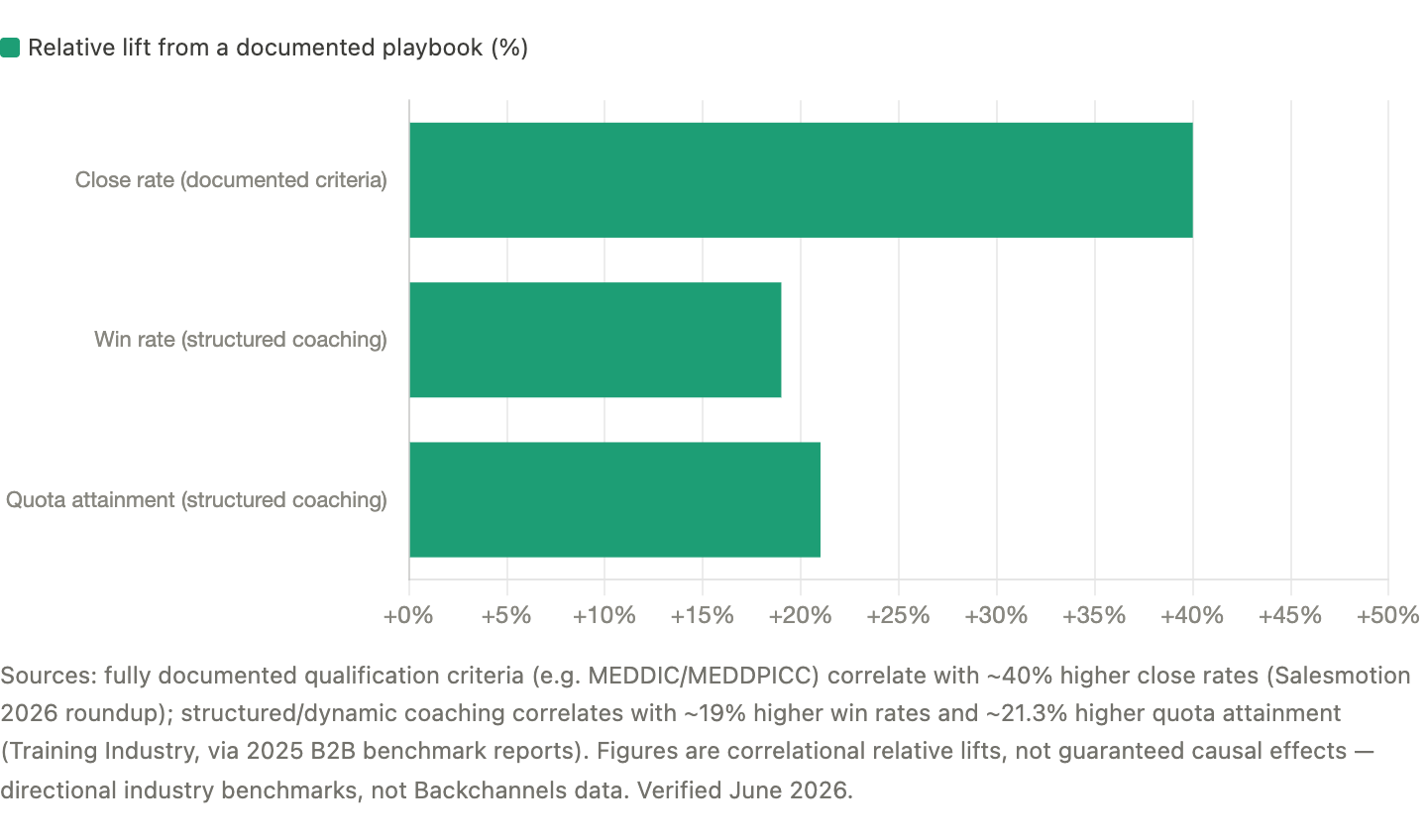
The defining trait across all ten is that success is codified, not left to chance. Each company turned what works into a documented, teachable system, which is why their sales motions scale and their new reps ramp faster. The commitment to building a playbook at all to making success repeatable rather than dependent on individual talent is the foundational lesson.
The second shared principle is that the best playbooks fit their context. Snowflake's enterprise plays, Stripe's developer-calibrated approach, Zoom's efficiency-focused motion each playbook matches the company's specific market, buyers, and product. There's no universal playbook; the effective ones are built for the actual dynamics of how a particular company sells.
The third commonality is that strong playbooks are grounded in evidence and continuously refined. Gong's data-driven plays and Outreach's measurement discipline reflect an understanding that a playbook should be based on what actually works and improved over time. The best playbooks aren't static documents they're living systems that get sharper with use.
How to do this yourself, without their resources
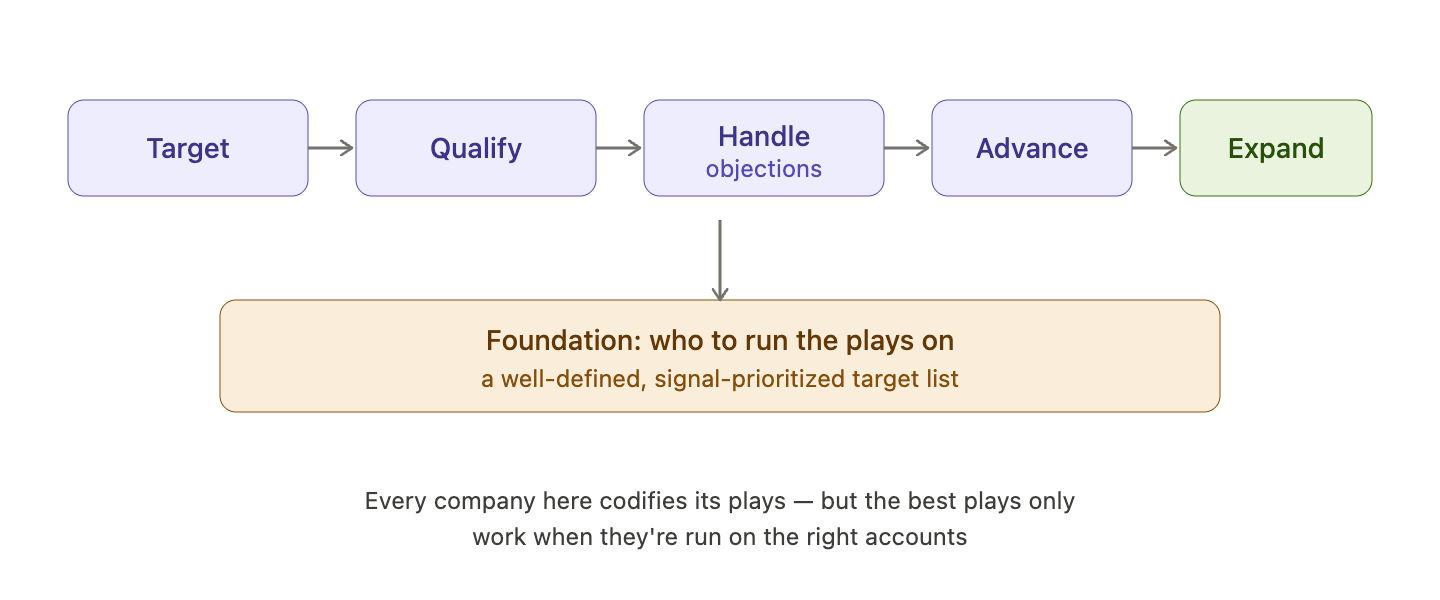
Here's the foundation that every playbook above depends on, and the part that's easy to overlook: a playbook is only as good as the targeting it's run on. The best plays in the world fail if they're aimed at the wrong accounts. Every company here runs its playbook on a well-defined set of targets and figuring out who those targets are, and which are worth running plays on right now, is exactly the problem we built Backchannels to solve.
Backchannels is a buyer database with buying signals layered on top, which means before you run your plays, you can identify exactly who to run them on. Instead of executing a great playbook against a poorly chosen list, you can define your ideal profile, find the accounts that genuinely fit, and see which are showing signals of being in-market right now so your plays are aimed at the accounts most likely to convert. When we run our own plays this way, against a well-targeted, signal-prioritized list rather than a generic one, the entire playbook becomes more effective, because even the best plays only work when they reach the right people at the right time.
The practical path is to build your playbook and your targeting together. Document your plays your stages, your qualification criteria, your messaging, your objection handling and ground them in what actually works for your team, the way Gong and Outreach do. Build the playbook to fit your specific selling environment, calibrate it to your buyers, and include plays for expansion, not just acquisition. Then make sure you're running it on the right accounts: a well-defined target list, prioritized by real signals of readiness. Backchannels handles that targeting foundation who to run the plays on, and when so your playbook is aimed at the accounts where it will actually work.
TRY BACKCHANNELS FREE
Your next customers are already in the database.
Backchannels gives you 225,000 verified software decision-makers. Filter to your exact ICP, preview matches for free, and push them straight into Salesforce or HubSpot. Pay per contact. No subscription, no contract.
Browse contacts freeNo credit card. Preview before you spend a credit.
No items found.
Final Thoughts
The bottom line A great sales playbook turns individual talent into a repeatable system, and the ten companies above show what that looks like across very different selling environments. The specific plays vary, but the underlying disciplines are consistent: codify what works, fit the playbook to your context, ground it in evidence, and keep refining it. You don't need their resources to apply the thinking. Document your plays, build them to fit how you actually sell, and improve them continuously. And remember that the best playbook only works when it's run on the right accounts so pair it with sharp targeting and good timing. That foundation, knowing exactly who to run your plays on, is what makes a great playbook actually produce results, and it's exactly what Backchannels is built to give you.
Published
August 30, 2026
Writer
Joe Backchannels
Share


Most Wanted