
.png)
The Backchannel
10 Companies That Won Their Category With Account-Based GTM
Featured Blog


Most go-to-market strategies are a numbers game: cast a wide net, generate as many leads as possible, and hope enough of them convert. Account-based GTM is the opposite philosophy. Instead of chasing volume, it picks a specific, finite set of accounts that matter most and pursues them with focus, coordination, and patience. Rather than asking "how many leads can we get?", it asks "how do we win these particular companies?"
For the right kind of business especially one selling complex, high-value products to a defined market this approach can be transformative. When the deals are big and the buyers are few, reaching the right twenty or two hundred accounts deeply matters far more than reaching twenty thousand shallowly. The companies that have mastered this don't win by being everywhere; they win by being exactly where they decided to be, with a coordinated effort behind each target.
Below are ten companies whose success is closely tied to an account-based approach, what made their execution work, and how you can apply the same thinking even without an enterprise budget. At the end, I'll cover the part that determines whether account-based GTM succeeds or fails before any outreach happens choosing and understanding the right accounts and how we think about that at Backchannels.
1. Snowflake
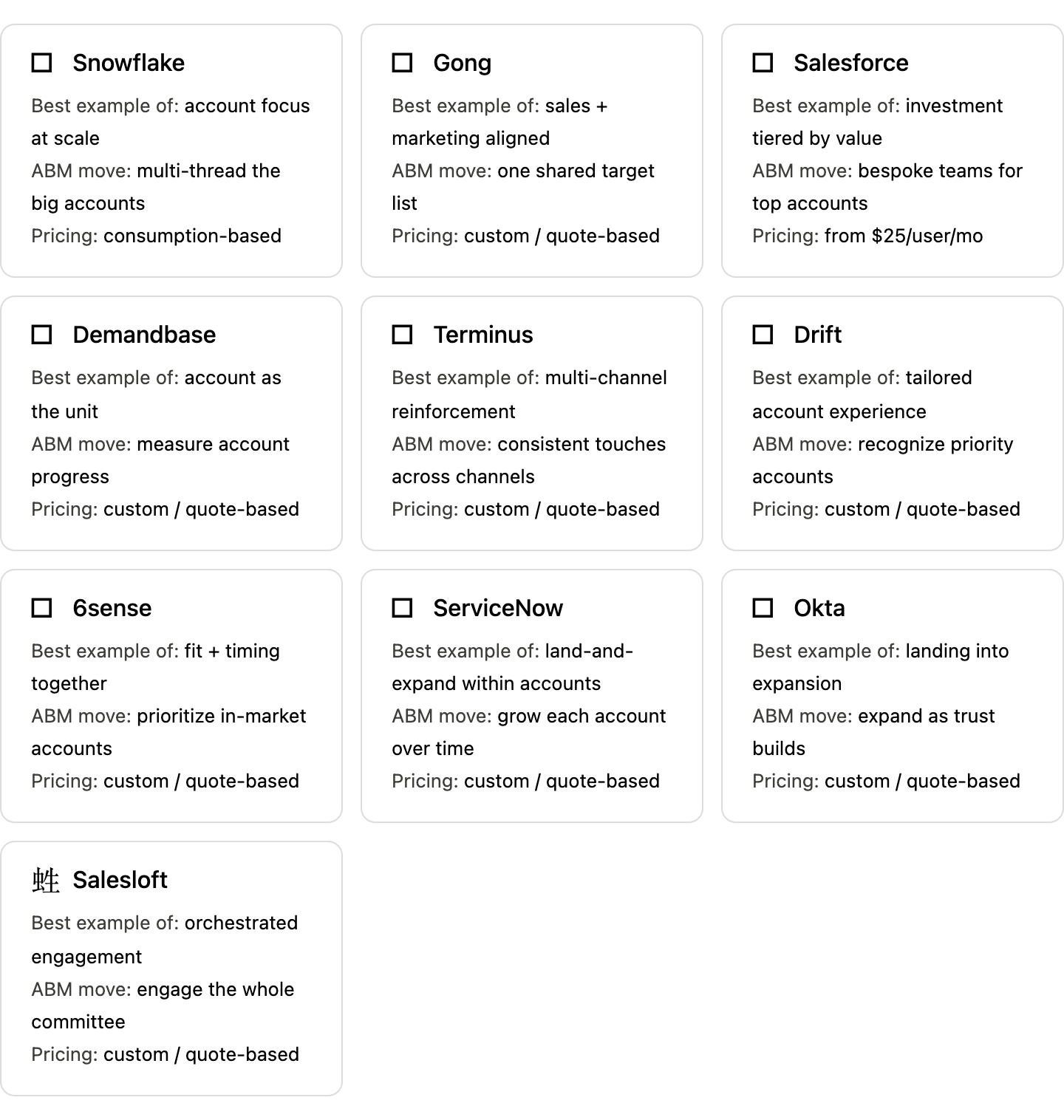
Snowflake is one of the clearest examples of account-based GTM done well at scale. Selling a data platform to large enterprises, the company focused intensely on a defined set of high-value target accounts and built a coordinated motion to penetrate each one. The approach wasn't about reaching as many companies as possible it was about winning the specific large accounts where the deal size justified deep investment.
What makes Snowflake instructive is the discipline of account focus paired with multi-threading. Big enterprise deals involve many stakeholders, so the company built a motion that engaged multiple people within each target account, coordinated across sales and marketing, and sustained the effort over long cycles. They treated each major account almost as a market of its own, worthy of a tailored strategy.
The takeaway for your team is that when your deals are large and your buyers are concentrated, focus beats breadth. Identify the specific accounts where a win is worth a serious, coordinated effort, and commit to pursuing them deeply rather than spreading yourself across a huge list. Depth in the right accounts is the whole game.
2. Gong
Gong applied account-based principles by combining sharp targeting with coordinated, insight-led outreach into priority accounts. Rather than treating all prospects equally, the company concentrated its best efforts on accounts that fit its ideal profile, using a strong point of view and relevant messaging to break in. The targeting precision made the outreach efficient and the messaging resonant.
What's worth studying is how Gong aligned its marketing and sales around the same set of priority accounts. When both functions focus on the same targets with a consistent message, the account experiences a coherent, reinforcing set of touches rather than disconnected outreach. That coordination is a core principle of account-based GTM, and it's a big part of why Gong's motion punched above its weight.
For your team, the lesson is to align your efforts around a shared list of priority accounts. When everyone is pursuing the same well-chosen targets with a consistent message, your outreach compounds instead of fragmenting. Coordination around a focused account list is something even a small team can do, and it dramatically improves how each account experiences you.
3. Salesforce
Salesforce, despite its enormous scale, has long used account-based strategies for its largest and most strategic accounts. For major enterprise customers, the company assigns dedicated teams, builds tailored account plans, and pursues a coordinated, multi-year relationship rather than a transactional sale. The biggest accounts get a bespoke, high-touch approach.
What makes Salesforce instructive is how it segments its motion by account value. Not every customer warrants the same investment, so the company reserves its most intensive, account-based efforts for the accounts where the potential is greatest. This tiering ensures that high-value accounts get the deep, coordinated attention they need while smaller accounts are served more efficiently through other motions.
The applicable lesson is to match your level of investment to the value of the account. Reserve your most intensive, coordinated efforts for your highest-potential targets, and serve the rest through lighter-touch motions. Account-based GTM doesn't mean treating every account this way it means knowing which accounts deserve it and concentrating your effort there.
4. Demandbase
Demandbase belongs on this list because it both practices and enables account-based GTM the company built its business around the approach, which gives its own execution particular credibility. It focuses on identifying target accounts, coordinating marketing and sales around them, and engaging them with relevant, account-specific messaging across channels.
What's worth studying is the emphasis on treating the account, not the individual lead, as the fundamental unit. In account-based GTM, success is measured by progress within target accounts rather than by raw lead counts, which changes how teams prioritize and coordinate. Demandbase's whole philosophy reflects this shift from a lead mindset to an account mindset, and it's the conceptual core of the entire approach.
For your team, the takeaway is to start thinking in terms of accounts rather than individual leads. Ask how much progress you're making within your target accounts, not just how many leads you generated. This shift in the unit of measurement reorients your entire motion around winning specific companies, which is what account-based GTM is fundamentally about.
5. Terminus
Terminus, like other companies in the account-based space, built its approach around coordinating multiple channels to engage target accounts consistently. The idea is that a single target account should encounter a coordinated set of touches across email, ads, and other channels that reinforce each other rather than acting in isolation. Consistency across channels makes the whole effort more effective.
What makes this instructive is the multi-channel coordination. Reaching a target account through several reinforcing channels creates a more cohesive and memorable experience than relying on any single one. When an account sees a consistent message across multiple touchpoints, the cumulative effect builds familiarity and credibility in a way that scattered, single-channel outreach can't match.
The lesson for your team is to coordinate your outreach across whatever channels you have. Even a simple combination a relevant email reinforced by a connection on a professional network creates a more cohesive experience for a target account than a single channel alone. The point is consistency and reinforcement across touches, not the number of channels.
6. Drift
Drift applied account-based thinking by tailoring the buying experience for target accounts, particularly through personalized, real-time engagement. Rather than treating every visitor the same, the company focused on recognizing and engaging high-value target accounts with a more customized, responsive experience. The personalization signaled that the account mattered.
What's worth studying is the focus on the experience a target account has when it engages. In account-based GTM, the goal is to make priority accounts feel recognized and well-served, which requires tailoring the interaction rather than offering a generic one. Drift's emphasis on personalized, responsive engagement reflects the principle that target accounts should get a noticeably better, more relevant experience.
For your team, the takeaway is to make your target accounts feel recognized when they engage with you. Tailoring the experience referencing their specific situation, responding quickly, personalizing the interaction signals that they matter and differentiates you from companies treating everyone identically. A better experience for priority accounts is a competitive advantage that doesn't require a big budget.
7. 6sense
6sense applied account-based GTM by using data to identify which target accounts were showing signs of being in-market, then concentrating efforts on those accounts. Rather than pursuing all target accounts with equal intensity at all times, the company prioritized the ones demonstrating buying signals, making the account-based motion more efficient and better-timed.
What makes 6sense instructive is the combination of account focus with timing. Account-based GTM is most effective when you not only pick the right accounts but also engage them at the right moment. By layering buying signals onto a target account list, 6sense could focus its coordinated efforts on the accounts most likely to be receptive right now, rather than spreading effort evenly across the whole list regardless of readiness.
The lesson for your team is to prioritize your target accounts by timing, not just fit. Among your list of target accounts, some are showing signs of being ready now and others aren't. Concentrating your coordinated efforts on the accounts demonstrating real signals makes your account-based motion far more efficient, because you're being deep where it counts most at the moment it counts.
8. ServiceNow
ServiceNow built a powerful enterprise motion rooted in account-based principles, focusing on large organizations and expanding deeply within them over time. The company lands in a target account, delivers value, and then methodically expands across departments and use cases, treating each major account as a long-term relationship to grow rather than a one-time deal.
What's worth studying is the land-and-expand discipline within target accounts. Account-based GTM doesn't end when you win the account it continues as you deepen and expand the relationship over time. ServiceNow's success comes from treating each enterprise account as an ongoing opportunity to grow, coordinating efforts to expand the footprint methodically rather than considering the account "closed" after the first deal.
For your team, the takeaway is that winning a target account is the beginning, not the end. Plan how you'll expand within each account over time additional teams, additional use cases, deeper adoption. The accounts you've already won are often your best source of growth, and treating them as ongoing opportunities is a core part of account-based GTM that's easy to overlook.
9. Okta
Okta built its enterprise motion around landing in target accounts and expanding as those organizations adopted more of its capabilities. By focusing on a defined set of accounts and growing within them as adoption spread, the company built a motion where initial wins became platforms for deeper expansion. The focus on specific accounts made the expansion efficient and compounding.
What makes Okta instructive is how a focused initial landing can become a foundation for growth within an account. By winning a specific use case in a target account and then expanding as the organization's needs grew, Okta turned each account into an increasingly valuable relationship. The account focus is what made this expansion coherent rather than opportunistic they knew which accounts they were investing in deepening.
The lesson for your team is to think about how an initial win in a target account can become a foundation for more. Land with a clear, specific value, deliver it well, and then expand as the account's needs grow and trust builds. Focusing on a defined set of accounts and deepening within them creates compounding value over time, which is the long-term payoff of account-based GTM.
10. Salesloft
Salesloft applied account-based principles by enabling coordinated, well-orchestrated engagement with target accounts across multiple touches and stakeholders. Rather than a single rep sending isolated outreach, the approach emphasizes a coordinated sequence of touches that engages the right people within a target account in a deliberate, organized way.
What's worth studying is the orchestration of engagement within an account. Winning a target account usually requires engaging multiple stakeholders in a coordinated way over time, not just reaching one person once. Salesloft's emphasis on well-orchestrated, multi-touch engagement reflects the reality that account-based GTM is about a sustained, organized effort across an account, not a single point of contact or a one-off message.
For your team, the takeaway is to engage your target accounts in a coordinated, multi-stakeholder way. Map the key people within each account and plan a deliberate sequence of touches that engages them over time. Winning an account usually means building awareness and relationships across several people, so organizing that engagement rather than relying on a single contact is essential.
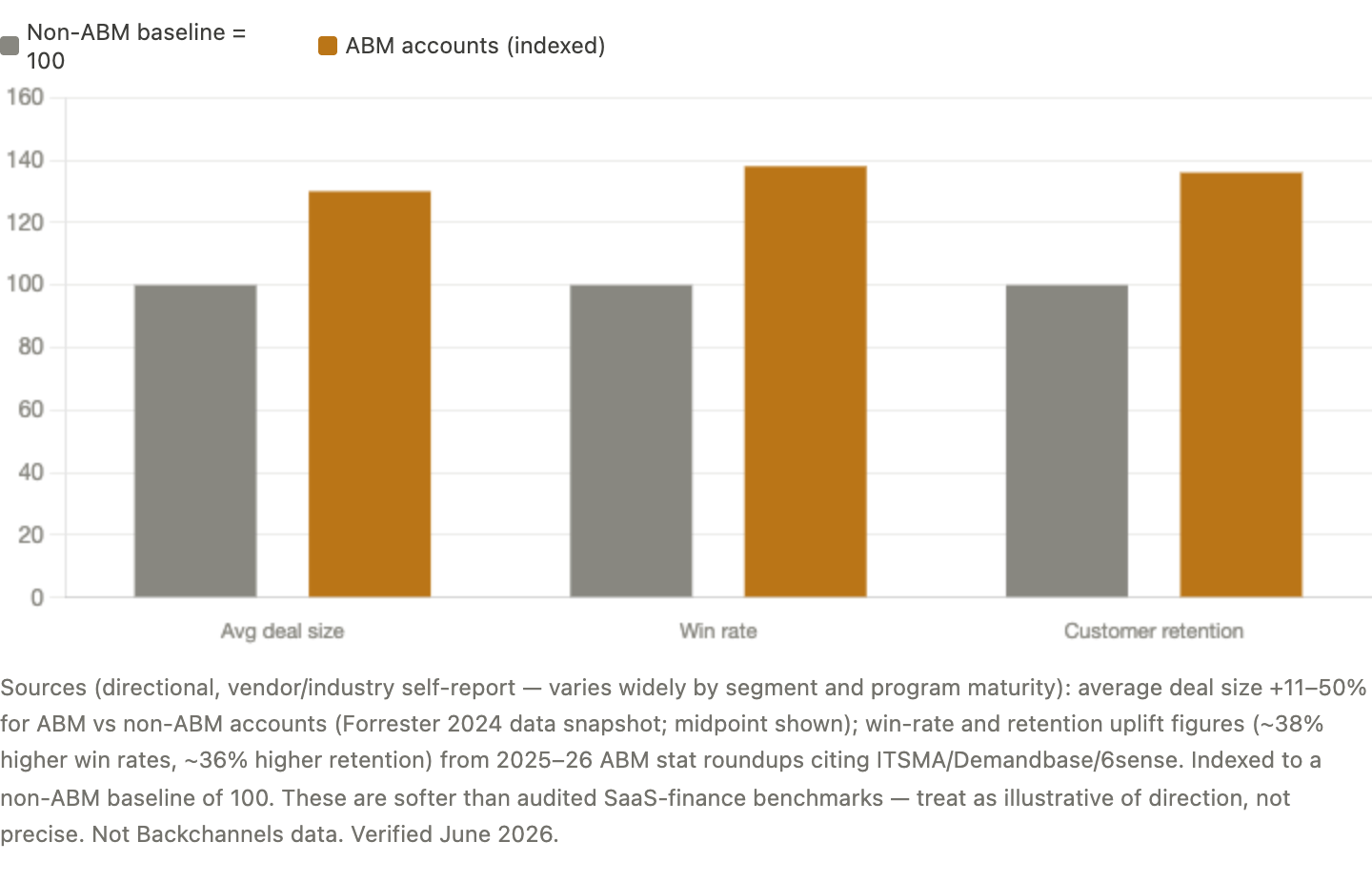
What these ten companies have in common
The defining trait across all ten is focus: each one concentrated its efforts on a defined set of accounts rather than chasing unlimited volume. Whether the target list was large or small, the philosophy was the same pick the accounts that matter most and pursue them deeply, treating the account rather than the individual lead as the fundamental unit of the strategy.
The second shared principle is coordination. These companies aligned marketing and sales, coordinated across multiple channels and stakeholders, and ensured each target account experienced a coherent, reinforcing set of touches. Account-based GTM only works when the effort behind each account is organized rather than fragmented, and these companies made that coordination a core competency.
The third commonality is that the best account-based motions extend beyond the initial win. Companies like ServiceNow, Okta, and Salesforce treated each account as a long-term relationship to land and then expand, recognizing that won accounts are often the richest source of future growth. Account-based GTM is as much about deepening existing accounts as it is about breaking into new ones.
How to do this yourself, without their resources
Here's the foundation that determines whether account-based GTM works, and the part that happens before any outreach: choosing the right accounts and understanding them deeply. Every company above succeeded because it picked the right targets the accounts where focused effort would pay off and understood them well enough to engage credibly. Get the account selection wrong, and all the coordination in the world is wasted on the wrong companies. This is precisely the problem we built Backchannels to solve.
Backchannels is a buyer database with buying signals layered on top, designed to help you choose and prioritize the right accounts for an account-based motion. Instead of guessing which companies belong on your target list, you can define your ideal profile precisely and identify the accounts that genuinely fit then, like 6sense, see which of them are showing signals of being in-market right now, so you can focus your coordinated efforts where they'll land best. When we approach our own account-based motion this way, starting from a well-chosen, signal-prioritized account list, the rest of the effort becomes far more effective, because we're pouring coordinated energy into the right accounts at the right time rather than hoping our target list was correct.
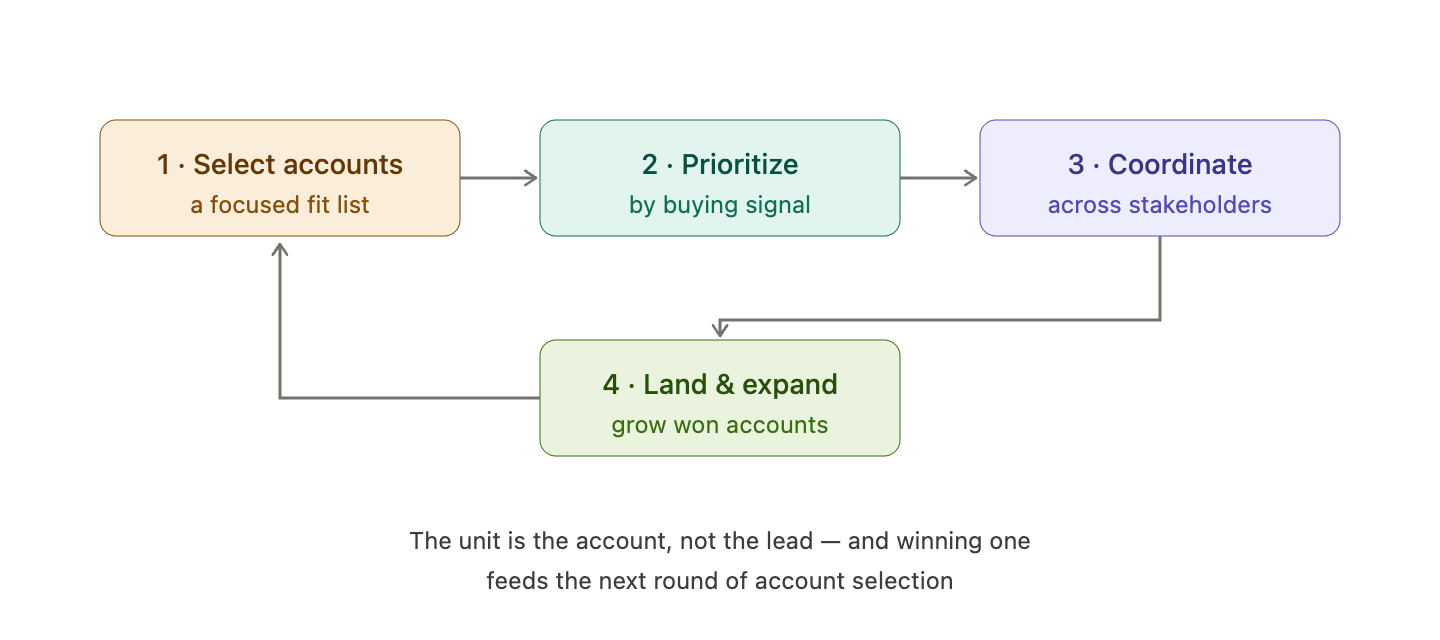
The practical path mirrors what these ten companies did. Start by defining your ideal account profile precisely, then build a focused target list of accounts that genuinely fit resist the urge to make the list too long, since focus is the whole point. Prioritize that list by timing, concentrating on accounts showing real signals of readiness. Then coordinate your engagement across channels and stakeholders, giving each priority account a coherent, reinforcing experience. And plan to expand within accounts you win over time. Backchannels handles the foundation choosing and prioritizing the right accounts based on fit and signals so your account-based motion is built on the correct targets from the start.
TRY BACKCHANNELS FREE
Your next customers are already in the database.
Backchannels gives you 225,000 verified software decision-makers. Filter to your exact ICP, preview matches for free, and push them straight into Salesforce or HubSpot. Pay per contact. No subscription, no contract.
Browse contacts freeNo credit card. Preview before you spend a credit.
No items found.
Final Thoughts
The bottom line Account-based GTM wins by trading breadth for depth: picking the accounts that matter most and pursuing them with focus, coordination, and patience. The ten companies above prove the approach works across many contexts, from enterprise data platforms to security to sales tools, united by the discipline of treating specific accounts not raw lead volume as the unit of their strategy. You don't need an enterprise budget to adopt the thinking. Choose your target accounts carefully, prioritize them by fit and timing, coordinate your engagement, and deepen the accounts you win. The entire approach rests on selecting and understanding the right accounts in the first place and that foundation is exactly what Backchannels is built to give you.
Published
August 25, 2026
Writer
Joe Backchannels
Share


Most Wanted