.png)
The Backchannel
10 Companies That Built Massive Pipelines Without Paid Ads
Featured Blog


There's a quiet assumption in a lot of B2B marketing that pipeline is something you buy that growth is a function of how much you're willing to spend on ads. But some of the most impressive pipeline engines ever built barely touched paid acquisition. They grew through content, community, product, word of mouth, and disciplined outbound, creating demand that compounded instead of demand they had to rent month after month.
That distinction matters more than ever. Paid channels have a brutal property: the moment you stop paying, the pipeline stops. Organic engines work the opposite way they're slow and hard to build, but once they're running, they keep producing without a meter ticking. The companies below figured out how to generate serious pipeline from channels they owned rather than channels they rented, and the underlying strategies are more accessible than their scale suggests.
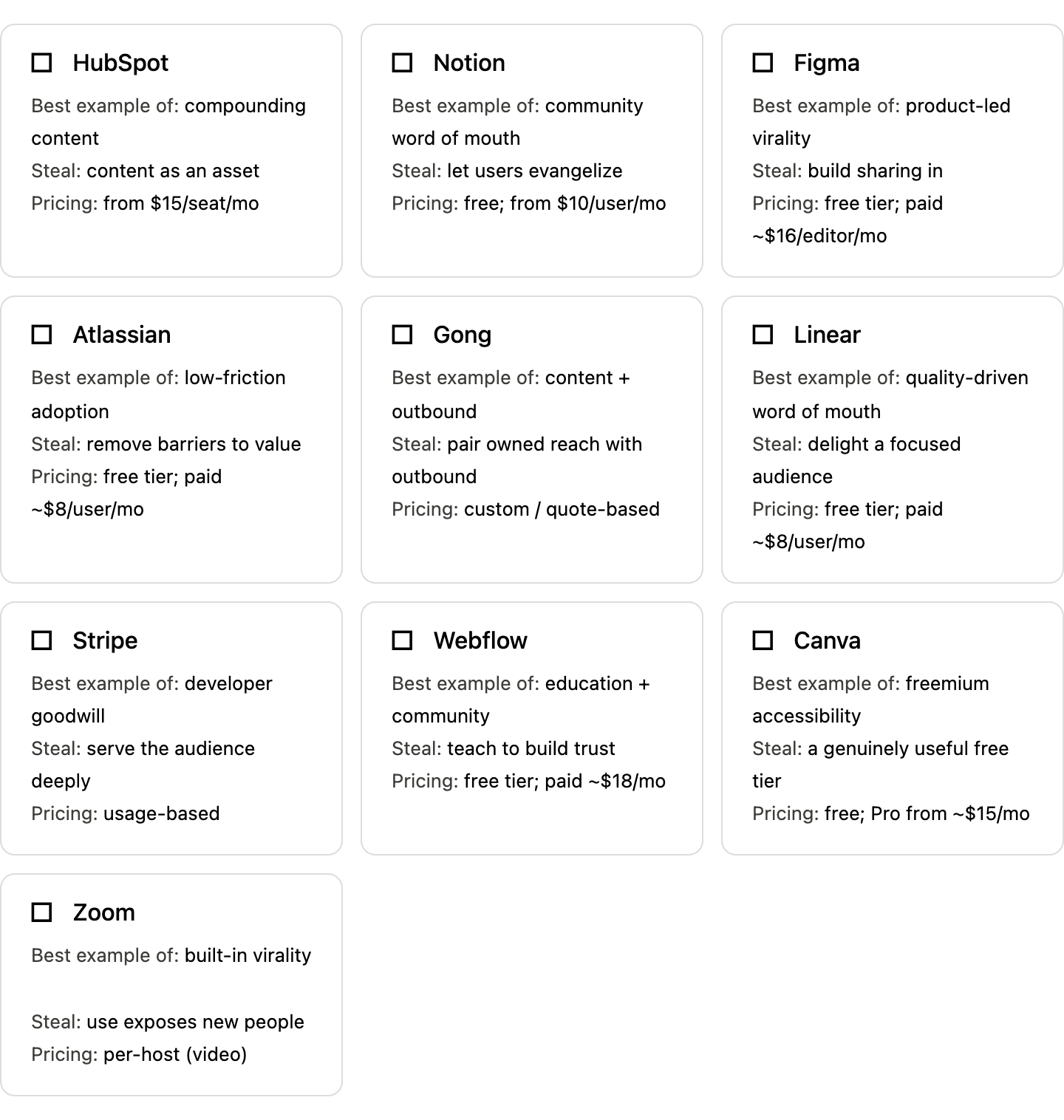
Below are ten companies that built substantial pipelines largely without paid ads, the core engine each one relied on, and how you can apply the thinking to your own motion. At the end, I'll cover the piece that makes any organic pipeline actually convert reaching the right accounts efficiently and how we think about that at Backchannels.
Source 1, Source 2, Source 3, Source 4
1. HubSpot
HubSpot is the canonical example of building pipeline through content rather than paid acquisition. By essentially inventing the inbound marketing playbook and producing enormous volumes of genuinely useful content, HubSpot attracted its target audience organically and converted that attention into a massive pipeline. The content was the engine, and it compounded for years.
What makes HubSpot instructive is the compounding nature of content. A useful article or tool published years ago continues attracting and converting prospects indefinitely, building an asset that appreciates rather than a cost that resets. HubSpot turned content into a durable pipeline engine that didn't depend on continuous ad spend, which is the defining advantage of organic over paid.
The takeaway for your team is that content is an investment that compounds. Producing genuinely useful content attracts your audience and generates pipeline that keeps working long after publication. It's slow to start and requires real commitment, but a content engine becomes a pipeline source that doesn't disappear the moment you stop spending.
2. Notion
Notion built enormous pipeline through community and word of mouth rather than paid acquisition. By cultivating a passionate user base that created templates, shared workflows, and evangelized the product, Notion generated demand organically at a scale paid ads couldn't match. The community became the pipeline engine.
What's worth studying is how community-driven growth compounds without linear cost. Each enthusiastic user attracted more users and created content that drew in others, producing a self-reinforcing loop that generated pipeline without paying for each new prospect. Once the community flywheel was spinning, it produced demand far more efficiently than paid channels.
For your team, the lesson is that a passionate community can be a powerful, low-cost pipeline engine. Empowering users to share and evangelize creates organic demand that compounds. Building community takes genuine investment and time, but it produces pipeline that doesn't depend on ad spend and becomes more valuable as it grows.
3. Figma
Figma generated massive pipeline through product-led, viral growth rather than paid acquisition. Because collaboration was built into the core of the product, every user tended to pull in others, and adoption spread organically within and across organizations. The product itself was the pipeline engine.
What makes Figma instructive is how product design drove distribution. By making collaboration central, Figma turned usage into growth each user invited others, and the product spread without paid acquisition driving it. This product-led virality generated pipeline efficiently because the growth mechanism was built into how the product worked.
The takeaway for your team is to look for ways your product can generate pipeline through use. If collaboration, sharing, or network effects can be built in, growth becomes partly self-propelling and reduces reliance on paid channels. Product-led growth is one of the most efficient pipeline engines available, though it requires the product to genuinely improve as more people use it.
4. Atlassian
Atlassian famously built an enormous business with very little traditional sales and minimal reliance on paid advertising, growing instead through product-led adoption and word of mouth. By making its products easy to adopt and letting them spread organically within organizations, Atlassian generated massive pipeline without the heavy paid acquisition many assumed was necessary.
What's worth studying is how Atlassian's low-friction, product-led model generated demand organically. By removing barriers to adoption and letting the products prove their value directly, Atlassian created a motion where demand grew through usage and word of mouth rather than paid channels. The efficiency of this model became a defining feature of the company.
For your team, the lesson is that reducing friction and letting your product spread can generate pipeline without heavy ad spend. Making it easy for people to adopt and experience value directly creates organic demand. A low-friction, product-led model can be a remarkably efficient pipeline engine that doesn't depend on continuous paid acquisition.
5. Gong
Gong built substantial pipeline through a combination of strong organic content and disciplined outbound rather than relying primarily on paid ads. By publishing data-driven insights that generated organic attention and pairing that with precise, well-executed outbound, Gong created a pipeline engine grounded in owned channels and sales discipline.
What makes Gong instructive is how it combined organic demand generation with targeted outbound. The content generated awareness and inbound interest, while disciplined outbound proactively pursued the right accounts. This combination created pipeline efficiently without depending on paid ads, blending organic attraction with proactive, precise sales effort.
The takeaway for your team is that combining organic content with disciplined outbound can build pipeline without heavy paid spend. Content generates awareness and inbound interest, while targeted outbound proactively reaches the right accounts. Together, they form a pipeline engine grounded in channels you own and control rather than ad spend you rent.
6. Linear
Linear built pipeline through product quality and word of mouth rather than paid acquisition. By creating a genuinely beloved product for a specific audience and earning a reputation for craft, Linear generated organic demand as enthusiastic users spread the word. The product's quality was the pipeline engine.
What's worth studying is how quality and focus generate organic pipeline. By building something exceptional for a well-defined audience rather than something adequate for everyone, Linear earned the kind of enthusiasm that drives word of mouth. A focused, high-quality product spreads organically within its target community because users genuinely love it and recommend it.
For your team, the lesson is that product quality can be a pipeline engine. Delighting a specific audience generates organic demand through word of mouth, reducing reliance on paid channels. Focusing on genuine quality for a well-defined audience creates passionate users who become your most efficient and credible source of pipeline.
7. Stripe
Stripe built massive pipeline largely through developer goodwill, documentation, and word of mouth rather than paid advertising. By serving developers exceptionally well and earning their trust, Stripe generated organic demand as developers adopted and recommended the product. The reputation and the community were the pipeline engine.
What makes Stripe instructive is how serving an audience exceptionally well generates organic pipeline. By focusing on developer experience and trust rather than aggressive paid acquisition, Stripe created a motion where demand grew through reputation and recommendation. The goodwill it built became a durable, efficient source of pipeline.
The takeaway for your team is that serving your audience exceptionally well generates organic pipeline. Earning genuine trust and goodwill, especially with a specific community, creates demand through reputation and word of mouth. Investing in your audience's experience can build a pipeline engine that doesn't depend on paid acquisition and compounds through recommendation.
8. Webflow
Webflow built significant pipeline through content, education, and community rather than relying primarily on paid ads. By creating extensive educational resources and cultivating a community of users who shared and evangelized, Webflow generated organic demand at scale. The education and community formed the pipeline engine.
What's worth studying is how education generates organic pipeline. By teaching its audience and building resources that genuinely helped people, Webflow attracted users and built trust without heavy paid acquisition. Educational content draws in an audience and positions the company as helpful, generating pipeline that compounds as the resources continue to attract people over time.
For your team, the lesson is that education can be a powerful organic pipeline engine. Teaching your audience and creating genuinely helpful resources attracts prospects and builds trust without paid spend. Educational content compounds, continuing to generate pipeline long after creation, which makes it an efficient and durable source of demand.
9. Canva
Canva built enormous pipeline through a freemium, product-led model and word of mouth rather than depending on paid ads. By making design accessible and offering a genuinely useful free product, Canva attracted a massive user base organically, with users spreading the product through sharing and recommendation. The product and its accessibility were the pipeline engine.
What makes Canva instructive is how a free, accessible product generates organic demand at scale. By removing barriers and letting people experience value directly, Canva created a motion where the user base grew through usage and word of mouth. The freemium model functioned as a pipeline engine that brought in enormous numbers of users without paid acquisition driving it.
The takeaway for your team is that a free, accessible product can generate organic pipeline at scale. Removing barriers and letting people experience value directly creates demand that spreads through usage and recommendation. A well-designed freemium model can be an efficient pipeline engine, provided there's a genuine path from free to paid.
10. Zoom
Zoom built massive pipeline through product virality and word of mouth rather than relying primarily on paid acquisition. Because the product was easy to use and inherently involved inviting others, Zoom spread organically as each use exposed new people to it. The product's viral nature was the pipeline engine.
What's worth studying is how a product that naturally involves others generates organic pipeline. Every Zoom meeting exposed new participants to the product, creating organic growth without paid acquisition driving it. This built-in virality generated pipeline efficiently because the growth mechanism was inherent to how the product was used.
For your team, the lesson is that a product which naturally involves others can generate organic pipeline. If using your product exposes new people to it, you build in a viral growth mechanism that reduces reliance on paid channels. Designing products that naturally spread through use creates an efficient, compounding pipeline engine.
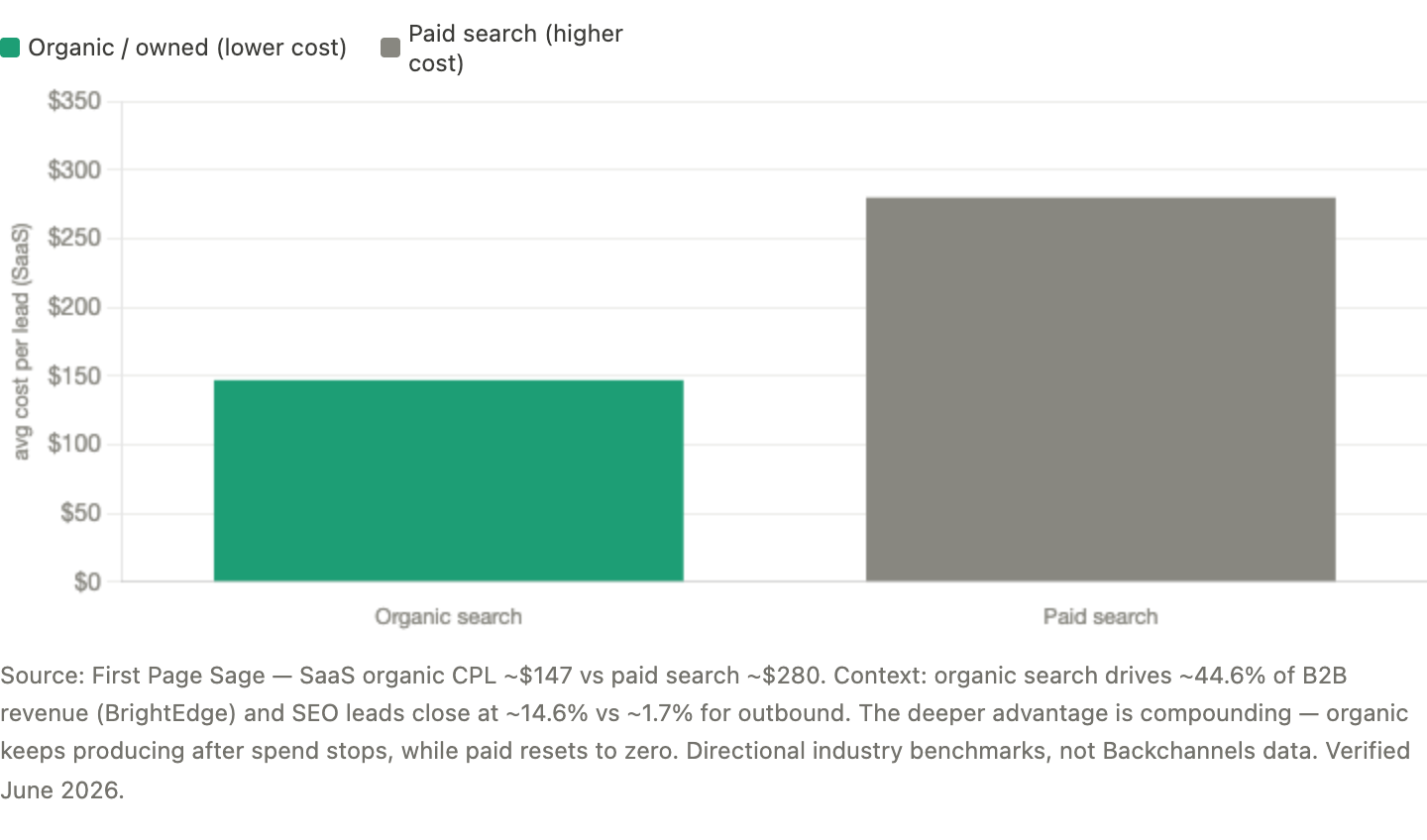
What these ten companies have in common
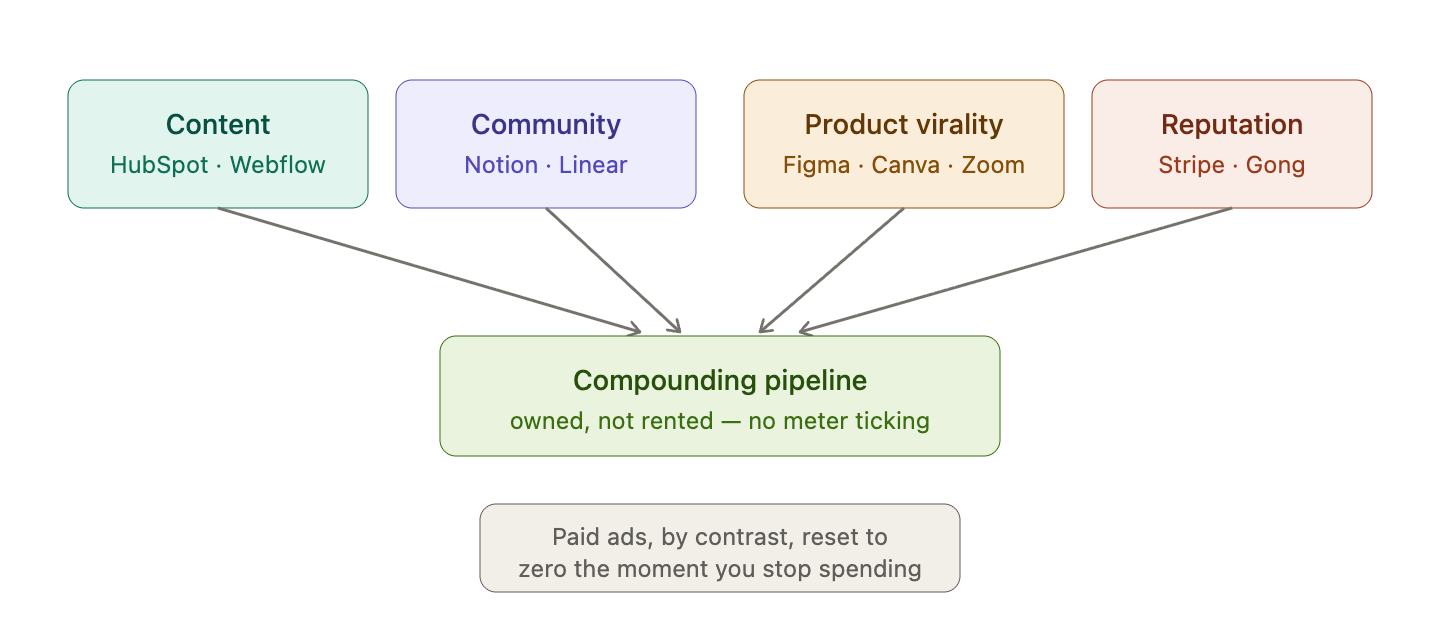
The defining trait across all ten is that they built pipeline through owned channels rather than rented ones. Whether the engine was content, community, product virality, or word of mouth, each company created demand that didn't disappear when spending stopped. The pipeline was an asset they built, not a cost they continuously paid.
The second shared principle is that these engines compound. Content keeps attracting prospects, communities keep growing, viral products keep spreading, and reputations keep generating referrals. Unlike paid ads, which reset to zero the moment you stop, these organic engines build on themselves over time, becoming more efficient as they mature.
The third commonality is patience and genuine value. None of these engines were built overnight, and all of them required delivering real value useful content, a beloved product, genuine service to a community. The organic pipeline was a byproduct of doing something genuinely valuable, which is what made it durable and hard for competitors to replicate.
How to do this yourself, without their resources
Here's the piece that connects every organic engine above to actual revenue, and the part that's easy to overlook: generating demand organically is only valuable if you can identify and reach the right accounts efficiently. A content engine or a community produces a lot of interest, but turning that interest into pipeline requires knowing which accounts are worth pursuing and reaching them at the right time. That's exactly the problem we built Backchannels to solve.
Backchannels is a buyer database with buying signals layered on top, which means whatever organic demand you generate, you can identify which accounts fit your profile and are showing signs of being in-market, then prioritize them. Instead of treating all the interest your organic engine produces identically, you can focus on the accounts most likely to convert and reach them when they're ready. When we pair organic demand with this kind of efficient targeting, the pipeline converts far better, because the interest the engine generates gets acted on intelligently rather than indiscriminately. And for the outbound side of an organic-plus-outbound motion like Gong's, Backchannels is what makes that outbound precise rather than scattershot.
The practical path is to build an organic engine and pair it with efficient targeting. On the engine side, choose the owned channel that fits you content, community, product virality, or word of mouth and commit to delivering genuine value through it, knowing it compounds over time. On the targeting side, make sure you can identify which accounts are worth pursuing among the demand you generate, and reach them when they're showing signs of readiness rather than chasing everyone equally. Backchannels handles that targeting layer identifying and prioritizing the right accounts so the organic pipeline you work hard to build actually converts into revenue.
TRY BACKCHANNELS FREE
Your next customers are already in the database.
Backchannels gives you 225,000 verified software decision-makers. Filter to your exact ICP, preview matches for free, and push them straight into Salesforce or HubSpot. Pay per contact. No subscription, no contract.
Browse contacts freeNo credit card. Preview before you spend a credit.
No items found.
Final Thoughts
The bottom line Massive pipeline doesn't require massive ad spend. The ten companies above built substantial, durable pipeline through owned channels content, community, product, and word of mouth creating demand that compounded rather than demand they had to rent. The organic approach is slower to build but far more durable, because the engine keeps running without a meter ticking. You don't need their scale to apply the thinking. Choose an owned channel that fits you, commit to delivering genuine value through it, and let it compound. Then make sure you can identify and reach the right accounts efficiently, so the demand you generate actually converts. Build the organic engine, target intelligently, and you'll have pipeline that doesn't vanish when the spending stops which is exactly what Backchannels is built to help with.
Published
September 2, 2026
Writer
Joe Backchannels
Share


Most Wanted