12 min read

12 min read

June 2026
12 min read
12 min read
June 2026
12 min read
12 min read
June 2026
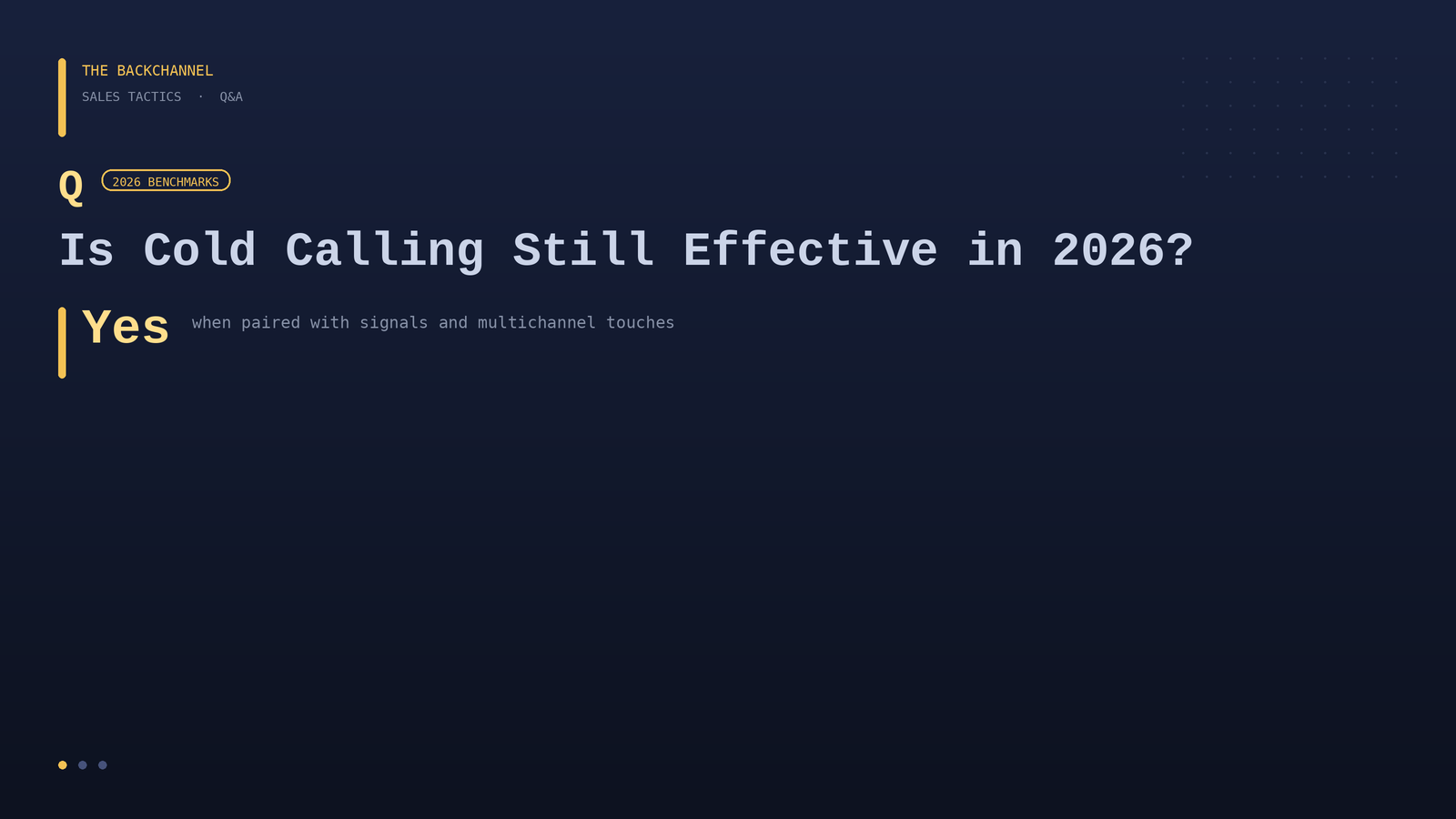
Yes, cold calling is still effective in 2026, but its results depend almost entirely on data quality and targeting. The industry-average dial-to-meeting rate is about 2 to 3 percent (roughly one meeting per 40 dials), while top teams reach 5 to 8 percent or higher. And buyers remain reachable by phone: most will accept a meeting from a seller who reaches out, and a majority of executives still prefer phone contact. The "cold calling is dead" claim usually says more about a team's list than about the channel.
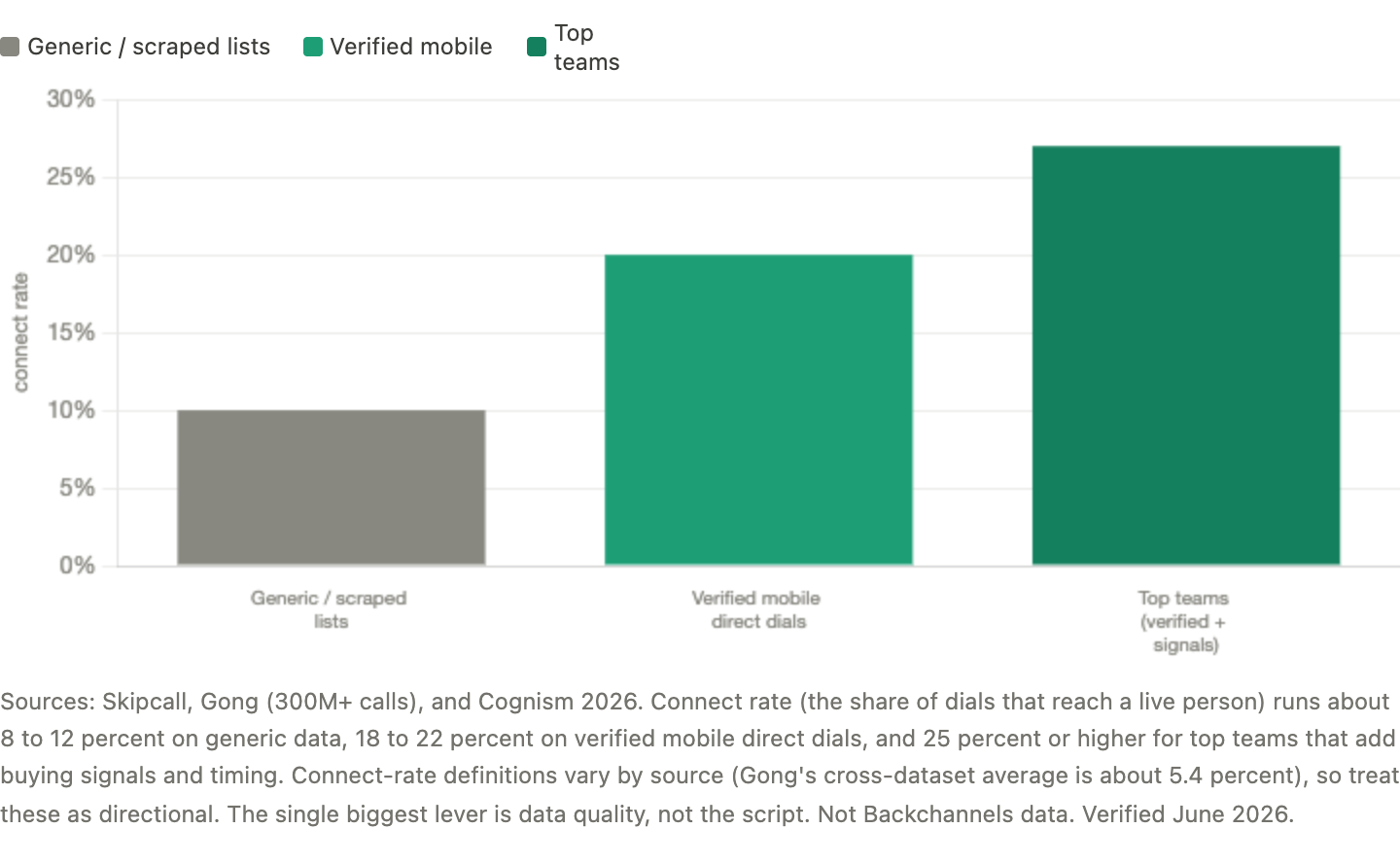
The clearest proof that the channel still works, and that data is the deciding factor, shows up in connect rates by data quality:
The strongest argument against the "dead channel" narrative is buyer behavior. Across RAIN Group's prospecting research, 82% of buyers accept meetings with sellers who proactively reach out, and 57% of C-level and VP buyers still prefer to be contacted by phone. Cold outreach also remains a major pipeline source: more than half of B2B leads still originate from it. Sentiment among sellers is genuinely split, which is worth being honest about. Roughly 31% of decision-makers report excellent or very good ROI from cold calling, while about 28% of sales pros call it "not effective," and around 24% still use it as their primary channel. The phone is not the universal answer, but it is far from finished.
The reason cold calling feels broken to many teams is a roughly 3x gap between average and top performers, and it is mostly about inputs, not talent. Gong's analysis of more than 300 million calls found an average connect rate of 5.4% versus 13.3% for top-quartile reps, and a set rate (meetings per conversation) of 4.6% versus 16.7%. Those differences compound at every stage. The same 800 dials that produce only 2 meetings for an average rep can produce up to 18 meetings for a top performer working verified data, and verified numbers cut the dials needed to reach a prospect from about 19 down to 8. When a team dials a stale, scraped list, it sees sub-1 percent results and blames the channel instead of the data.
Four inputs separate effective cold calling from spray-and-pray. First, data quality: verified direct dials and mobile numbers are the highest-leverage fix, since a poor list caps every downstream metric. Second, persistence with a stop rule: it takes about 8 attempts to reach a prospect, yet most reps quit after 2 or 3, and 93% of conversations happen by the third call and 98.6% by the fifth, so a disciplined 8 to 12 touch cadence over 2 to 3 weeks captures most of the upside without wasting dials past five. Third, timing and signals: reaching a prospect right after a trigger event, like a funding round or a relevant hire, turns a cold call into a warm one, and warm or referred contacts convert at 15 to 25 percent versus 1.5 to 2 percent for a pure cold list. Fourth, multichannel orchestration: pairing calls with email and LinkedIn nearly doubles email reply rates (3.44% versus 1.81%) and lifts conversion 2 to 3 times over single-channel outbound.
Notice that three of those four levers come down to reaching the right person, at the right moment, with accurate contact details. That is exactly where Backchannels helps. As a buyer database with buying signals, it gives reps verified, current contact data so dials reach live decision-makers instead of dead numbers, and it surfaces the accounts showing buying signals right now, so calls land when a prospect is already in-market. That is the difference between a 2 percent cold list and the warm-conversation rates that make the phone pay off.
Is cold calling dead in 2026?
No. Most buyers will accept a meeting from a seller who reaches out, a majority of executives still prefer phone contact, and over half of B2B leads still start with cold outreach. What has died is brute-force dialing of stale, untargeted lists.
What is a good cold calling success rate?
The average dial-to-meeting rate is about 2 to 3 percent (one meeting per roughly 40 dials), and top teams reach 5 to 8 percent or higher. Connect rates run about 8 to 12 percent on generic data and 18 to 22 percent on verified mobile numbers.
How many cold calls does it take to book a meeting?
On average, roughly 40 dials per booked meeting at a 2 to 3 percent rate, but the figure swings widely with data quality. Top performers using verified lists need under 100 dials per meeting where weaker lists can need 400 or more.
What makes cold calling more effective?
Verified contact data, a persistent 8 to 12 touch cadence (most conversations happen by call 5), calling on buying signals and at high-connect windows, and combining calls with email and LinkedIn rather than relying on the phone alone.
Is cold calling or cold email better?
Neither alone wins. They work best together: adding calls nearly doubles email reply rates, and multichannel sequences beat single-channel outbound by 2 to 3 times. The phone gives real-time conversation, while email scales reach.
Backchannels gives you 225,000 verified software decision-makers. Filter to your exact ICP, preview matches for free, and push them straight into Salesforce or HubSpot. Pay per contact. No subscription, no contract.
Browse contacts freePublished
October 27, 2026
Writer
Joe Backchannels
Share


Most Wanted
12 min read
12 min read
June 2026
12 min read
12 min read
June 2026