.png)
The Backchannel
10 B2B Companies Running the Most Creative Demand Gen Campaigns
Featured Blog


Demand generation gets a bad reputation for being formulaic gate an ebook, run some ads, retarget the clicks, repeat. But the companies that actually break through do something most teams won't: they treat demand gen as a creative discipline, not a checklist. They build campaigns people remember, talk about, and seek out, which is a fundamentally different game than buying impressions and hoping for form fills.
What makes a demand gen campaign "creative" isn't a clever tagline. It's a willingness to do something distinctive to give away genuine value, to take a real point of view, to build something useful enough that the audience comes to it rather than being chased. The companies below have each found a way to generate demand that doesn't feel like generic marketing, and the underlying ideas transfer even if you can't replicate the exact execution.
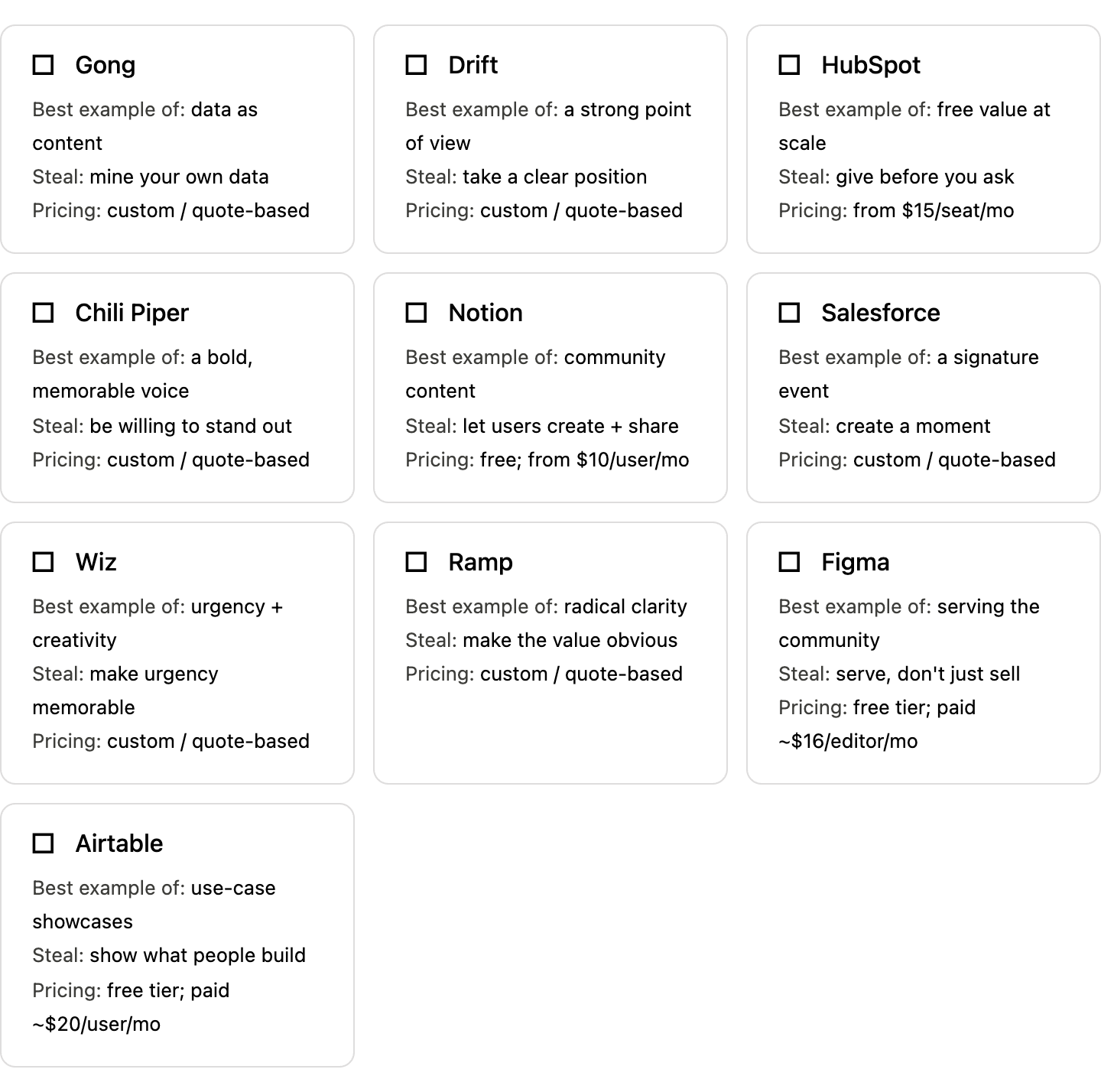
Below are ten B2B companies running demand gen worth studying, the core creative idea behind each, and how you can apply the thinking to your own motion. At the end, I'll cover the part that determines whether all that generated demand actually turns into pipeline capturing and acting on it efficiently and how we think about that at Backchannels.
1. Gong
Gong built a demand gen engine around data-driven insights, turning its own product data into a steady stream of compelling, shareable content. Rather than generic thought leadership, Gong publishes specific, counterintuitive findings about what actually works in sales, which gives its audience a reason to pay attention and share. The content is the campaign.
What makes Gong instructive is how it uses proprietary data as a demand gen asset. Because the insights are based on real data the company uniquely has, the content is both credible and impossible for competitors to copy. This turns demand gen into something distinctive rather than the same generic advice everyone else publishes, and it positions Gong as a authority in the process.
The takeaway for your team is to mine whatever unique data or insights you have and turn them into content. Original findings that only you can produce are far more compelling than recycled best practices, and they generate demand by giving your audience genuinely valuable, shareable information. Your data is a demand gen asset most companies leave untapped.
2. Drift
Drift built much of its early demand around a strong, opinionated point of view, championing a specific philosophy of how businesses should engage with buyers. Rather than staying neutral, the company took clear positions, which attracted an audience that shared those beliefs and gave the brand a distinct identity. The point of view was the magnet.
What's worth studying is how a clear, even provocative point of view generates demand. By standing for something specific and articulating it confidently, Drift attracted attention and built a following in a way bland, agreeable content never could. A strong perspective creates an audience of people who align with it, which is a powerful foundation for demand.
For your team, the takeaway is to develop and express a genuine point of view. Taking a clear position on something that matters in your space attracts an aligned audience and differentiates you from competitors hedging their bets. A strong perspective, confidently expressed, generates demand by giving people something to rally around.
3. HubSpot
HubSpot generates enormous demand through free tools and educational resources that deliver real value before any ask. From free tools to courses and certifications, the company gives away genuinely useful things that attract its target audience and build goodwill. The free value is the campaign, and it operates at massive scale.
What makes HubSpot instructive is how giving away value creates demand. By offering free tools and education that solve real problems, HubSpot attracts people who then associate the brand with helpfulness and competence. The free offerings function as both a demand gen channel and a way to build trust, drawing people in without the friction of a hard sell.
The takeaway for your team is to give away genuine value to generate demand. Free tools, resources, or education that solve real problems attract your audience and build trust in a way advertising can't. Leading with generosity draws people in and positions you as helpful, which generates demand more effectively than constantly asking for something.
4. Chili Piper
Chili Piper generates demand through bold, irreverent campaigns that stand out in a sea of beige B2B marketing. The company's willingness to be playful, provocative, and genuinely entertaining gives its campaigns a personality that gets noticed and remembered. The boldness itself is the differentiator.
What's worth studying is how personality and boldness cut through. In a category where most marketing is forgettable and safe, Chili Piper's distinctive, irreverent voice makes its campaigns memorable. Being willing to stand out to be entertaining rather than just professional is a creative demand gen strategy that generates attention precisely because so few competitors are willing to do it.
For your team, the takeaway is that a distinctive, bold voice can generate demand by making you memorable. You don't have to be irreverent, but you do have to be willing to stand out rather than blend in. In a sea of safe, forgettable marketing, genuine personality is a competitive advantage that draws attention.
5. Notion
Notion generates demand largely through its community and the content that community creates. By empowering users to build templates, share workflows, and showcase creative uses of the product, Notion turned its user base into a demand gen engine that produces endless authentic content. The community's creativity drives awareness and adoption.
What makes Notion instructive is how community-generated content fuels demand. Instead of producing all its own marketing, Notion enabled its users to create and share, generating authentic content at a scale and credibility the company couldn't achieve alone. User-created content is both more believable and more abundant than brand-produced marketing, making it a powerful demand engine.
The takeaway for your team is to empower your users to create and share. Community-generated content templates, examples, showcases, stories generates demand authentically and at scale. When your users become your marketers, you get content that's more credible and more plentiful than anything you could produce in-house.
6. Salesforce
Salesforce generates massive demand through its events, most notably its flagship conference, which it turned into a major industry moment. By creating a large-scale event that brings together its community, customers, and prospects, Salesforce generates enormous attention, demand, and goodwill. The event is a demand gen engine in itself.
What's worth studying is how a signature event generates demand. By creating a moment the industry pays attention to, Salesforce concentrates attention and demand in a way ongoing marketing can't. The event becomes both a demand gen channel and a community-building exercise, generating pipeline while strengthening relationships with existing customers and prospects.
For your team, the takeaway is that events even small ones can generate concentrated demand. Creating a moment that brings your audience together generates attention and relationships in a way that scattered marketing doesn't. You don't need a massive conference; even a focused virtual event or gathering can concentrate demand and deepen relationships.
7. Wiz
Wiz generated remarkable demand in a short time partly through campaigns that combined clear messaging about an urgent problem with creative, attention-grabbing execution. The company made a critical problem feel urgent and addressable, and paired that with marketing that stood out. The combination of urgency and creativity drove rapid awareness.
What makes Wiz instructive is how it paired an urgent problem with creative execution. The urgency gave the audience a reason to care, while the creative execution made the message memorable. This combination a genuinely important problem communicated in an attention-grabbing way generates demand quickly because it's both relevant and distinctive.
The takeaway for your team is to combine a genuinely urgent problem with creative execution. Urgency alone can be forgettable if communicated blandly, and creativity alone can be hollow without substance. Pairing a real, pressing problem with distinctive, memorable marketing generates demand by being both important and impossible to ignore.
8. Ramp
Ramp generates demand through clear, benefit-focused campaigns that make its value tangible and immediate. Rather than abstract messaging, Ramp's demand gen consistently emphasizes concrete benefits saving money and time in ways that are easy to grasp and hard to ignore. The clarity of the value is the creative hook.
What's worth studying is how clarity itself can be a creative differentiator. In a space full of vague, jargon-heavy messaging, Ramp's insistence on concrete, tangible benefits stands out. Sometimes the most creative move is radical clarity making the value so obvious and compelling that it cuts through the noise of competitors talking in abstractions.
For your team, the takeaway is that clarity can be a powerful demand gen tool. Making your value concrete, specific, and immediately understandable differentiates you from competitors hiding behind vague messaging. In a noisy space, radical clarity about the benefit you deliver generates demand by being instantly graspable and compelling.
9. Figma
Figma generates demand partly through content and events that celebrate and serve its creative community. By creating resources, events, and content that genuinely serve designers, Figma builds demand through authentic engagement with the community it serves. The audience-first approach generates demand by building real relationships.
What makes Figma instructive is how serving the community generates demand. Rather than treating its audience purely as prospects, Figma creates genuine value for the design community, which builds loyalty and demand authentically. When a company genuinely serves its audience's interests, demand follows because the relationship is real rather than transactional.
The takeaway for your team is to generate demand by genuinely serving your audience. Creating content, resources, and experiences that serve your community's real interests rather than just pushing your product builds authentic demand and loyalty. An audience-first approach generates demand as a byproduct of genuine service.
10. Airtable
Airtable generates demand by showcasing the creative, diverse ways people use its flexible product. By highlighting real use cases and creative applications, Airtable helps prospects imagine how they might use the product, generating demand through inspiration. The showcase of possibilities is the creative engine.
What's worth studying is how showcasing use cases generates demand. A flexible product can be hard to grasp, so by showing concrete, creative examples of what people build, Airtable helps prospects see the possibilities and imagine their own uses. Demonstrating real applications generates demand by making an abstract product tangible and inspiring.
For your team, the takeaway is to showcase how people actually use what you offer. Concrete examples and creative use cases help prospects imagine the possibilities and generate demand through inspiration. Especially for flexible or complex products, showing real applications makes the value tangible and sparks the audience's own ideas.
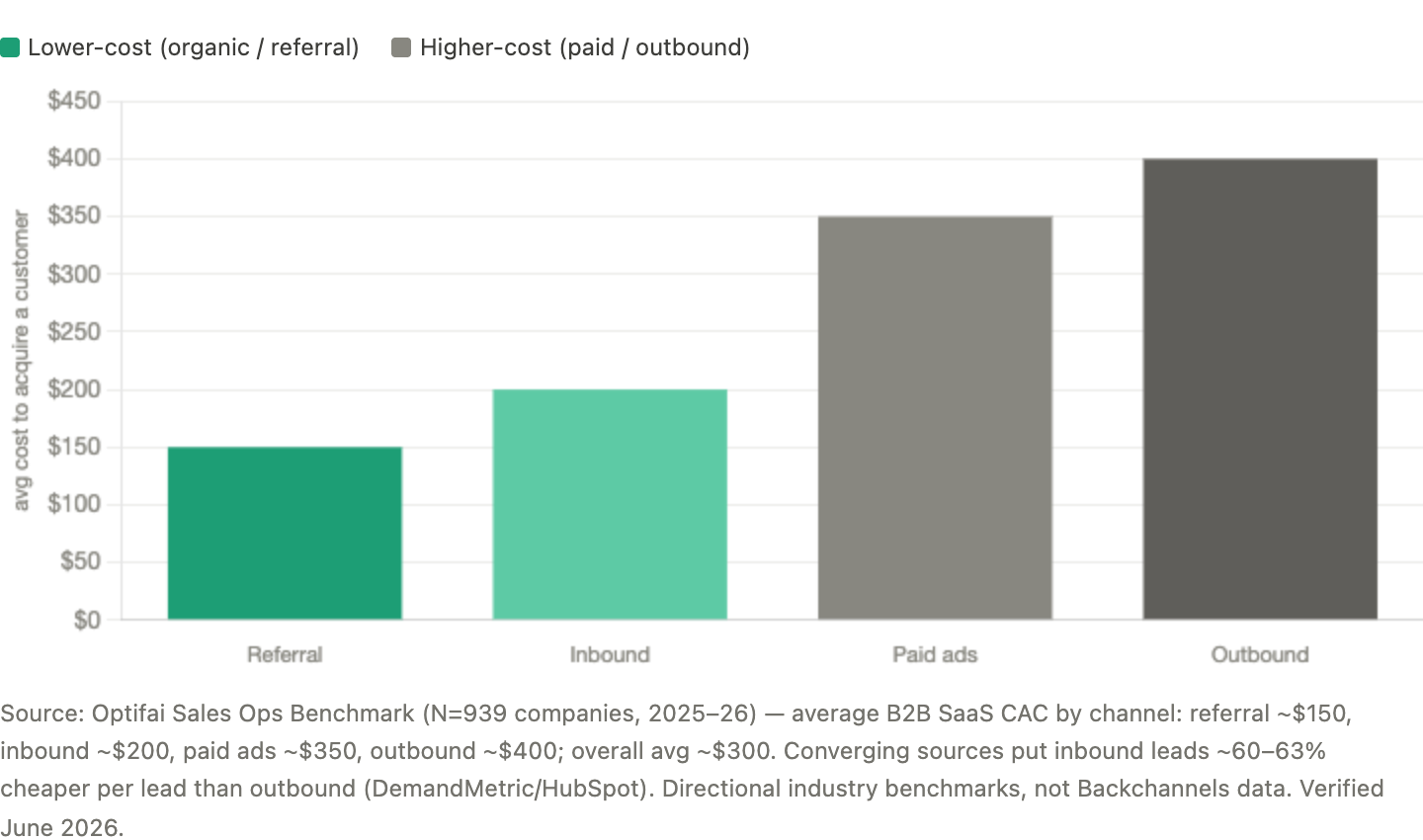
What these ten companies have in common
The defining trait across all ten is a willingness to do something distinctive rather than generic. Whether it's Gong's proprietary data, Drift's point of view, or Chili Piper's boldness, each company found a way to stand out instead of blending into the sea of forgettable B2B marketing. Creative demand gen starts with the courage to be different.
The second shared principle is leading with genuine value or substance. HubSpot's free tools, Notion's community enablement, Figma's service to its audience these campaigns work because they give the audience something real, not because they're clever for the sake of it. The creativity is in service of genuine value, which is what makes it generate lasting demand.
The third commonality is authenticity. The best campaigns reflect something true about the company its data, its beliefs, its community, its values rather than manufactured marketing. That authenticity is what makes the demand durable, because it's rooted in something real that competitors can't easily copy.
How to do this yourself, without their resources
Here's the part that's easy to miss when admiring creative campaigns: generating demand is only half the equation. The other half is capturing and acting on that demand efficiently, so the attention you create actually becomes pipeline. A brilliant campaign that fills the top of your funnel does nothing if you can't identify which of those people are worth pursuing and reach them at the right time. That's exactly the problem we built Backchannels to solve.
Backchannels is a buyer database with buying signals layered on top, which means when your demand gen creates interest, you can identify which accounts are actually showing signs of being in-market and prioritize them. Instead of treating every lead from a campaign identically, you can focus your follow-up on the accounts that fit your profile and are demonstrating real signals, so the demand you worked hard to generate converts efficiently. When we run our own demand gen, having that capture layer is what connects the creative top-of-funnel work to actual pipeline the campaign generates attention, and Backchannels helps us act on the right part of it at the right time.
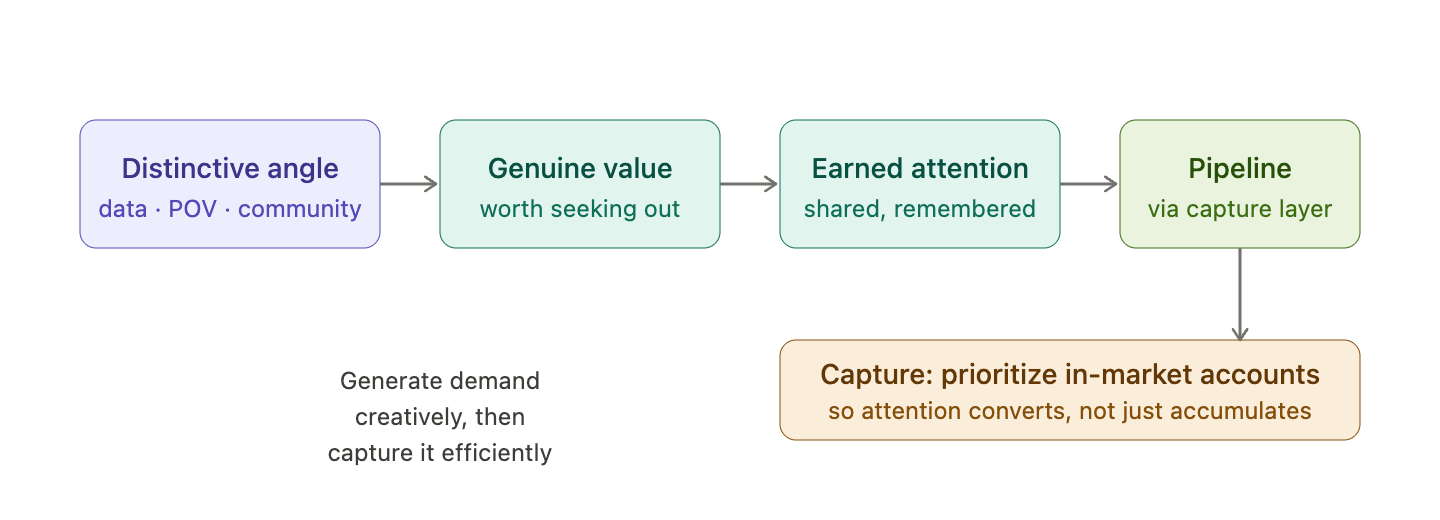
The practical path is to pair creative demand generation with efficient demand capture. On the generation side, find your distinctive angle your unique data, your point of view, your community, your radical clarity and build campaigns that give your audience genuine value. On the capture side, make sure you can identify which of the people you've attracted are worth pursuing, and reach them when they're showing signs of readiness rather than chasing everyone equally. Backchannels handles that capture layer identifying and prioritizing the accounts worth acting on so your creative demand gen actually turns into pipeline rather than just attention.
TRY BACKCHANNELS FREE
Your next customers are already in the database.
Backchannels gives you 225,000 verified software decision-makers. Filter to your exact ICP, preview matches for free, and push them straight into Salesforce or HubSpot. Pay per contact. No subscription, no contract.
Browse contacts freeNo credit card. Preview before you spend a credit.
No items found.
Final Thoughts
The bottom line The most creative demand gen campaigns generate demand by being distinctive, valuable, and authentic standing out from generic marketing through unique data, strong points of view, genuine generosity, and real service to an audience. The ten companies above prove that demand gen can be a creative discipline rather than a formulaic checklist. You don't need their budgets to apply the thinking. Find your distinctive angle, lead with genuine value, and build campaigns rooted in something true about your company. Then make sure you can capture and act on the demand you generate efficiently, focusing on the accounts showing real signs of readiness. Generate demand creatively, capture it efficiently, and the attention you create becomes pipeline which is exactly what Backchannels is built to help with.
Published
September 1, 2026
Writer
Joe Backchannels
Share


Most Wanted