.png)
The Backchannel
What is outbound sales (and how is it different from inbound)?
Featured Blog

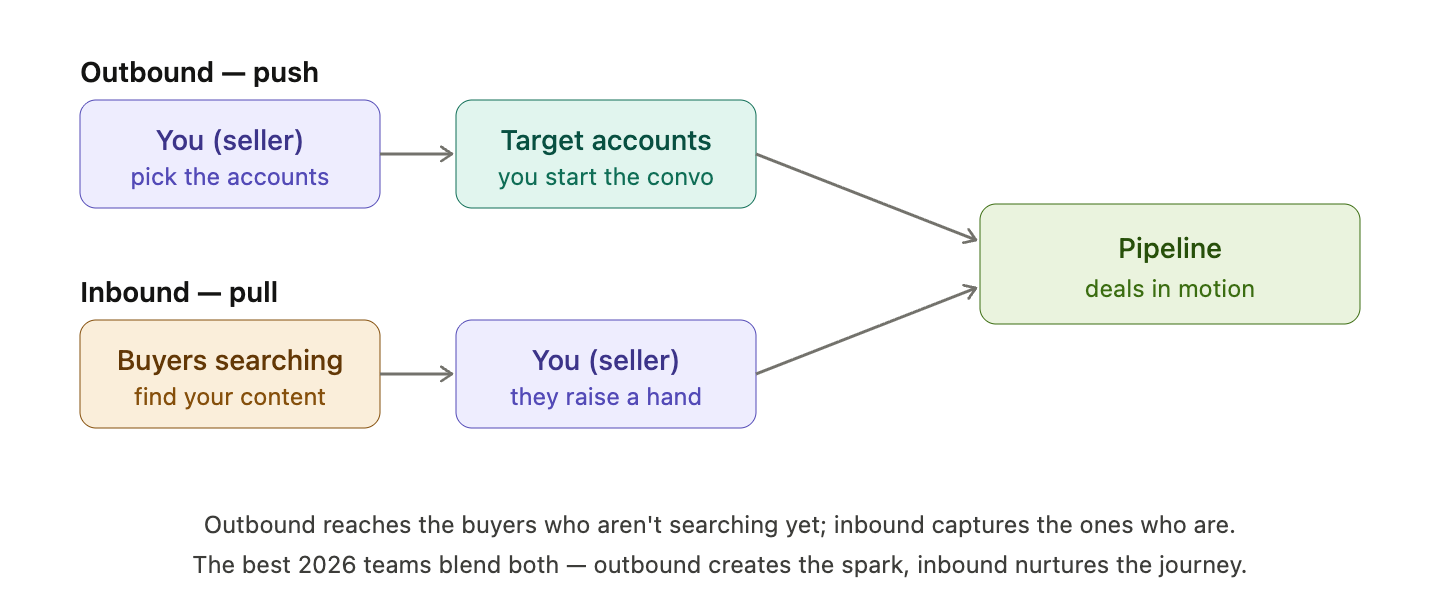
Outbound sales is a proactive approach where sellers initiate contact with potential customers who haven't yet expressed interest reaching out through cold email, cold calls, LinkedIn, and similar channels to start conversations and create demand. The seller makes the first move, hand-picking the accounts to pursue rather than waiting to be found.
Inbound sales is the mirror image: buyers come to you. They discover your business through content, search, social media, or referrals, then raise their hand by requesting a demo or downloading something. The seller's job is to respond to and guide that existing interest.
The single clearest way to tell them apart is to ask who makes the first move. In outbound, you reach out to the buyer. In inbound, the buyer reaches out to you. That one difference cascades into everything else the channels, the cost, the conversion rate, the deal size, and the kind of company each suits best.
Outbound vs. inbound sales: the key differences
Push vs. pull: the core mechanic
At heart, outbound is a push motion and inbound is a pull motion and the best teams run both.
The main outbound channels
Outbound runs on a handful of proactive channels. Cold email is the workhorse scalable but increasingly noisy, with average reply rates now around 3–6%. Cold calling still works when done well; despite its reputation, it remains one of the more direct ways to reach a decision-maker. LinkedIn and social outreach add a warmer, multi-touch layer. And the strongest results come from orchestrating these together: 80% of sales require 5+ follow-ups, and TOPO's research shows it takes 16 touches per account to generate a meeting. Single-touch outbound almost always underperforms yet nearly half of reps quit after one attempt.
Does outbound or inbound work better?
This is the wrong question, and the data shows why. On a per-lead basis, inbound looks dramatically better Marketing Sherpa data shows inbound leads convert at 14.6% versus just 1.7% for outbound but that comparison is misleading, because it pits warm hand-raisers against cold strangers. Outbound earns its keep on three other dimensions: outbound campaigns generate about 50% larger deal sizes on average, it produces results in 4–8 weeks rather than the 6–12 months inbound takes to compound, and critically, it reaches the buyers inbound never will the roughly 80% of your ideal customers who would buy if they knew you existed but aren't searching for you. The chart below shows the real tradeoff: each motion wins on different things.
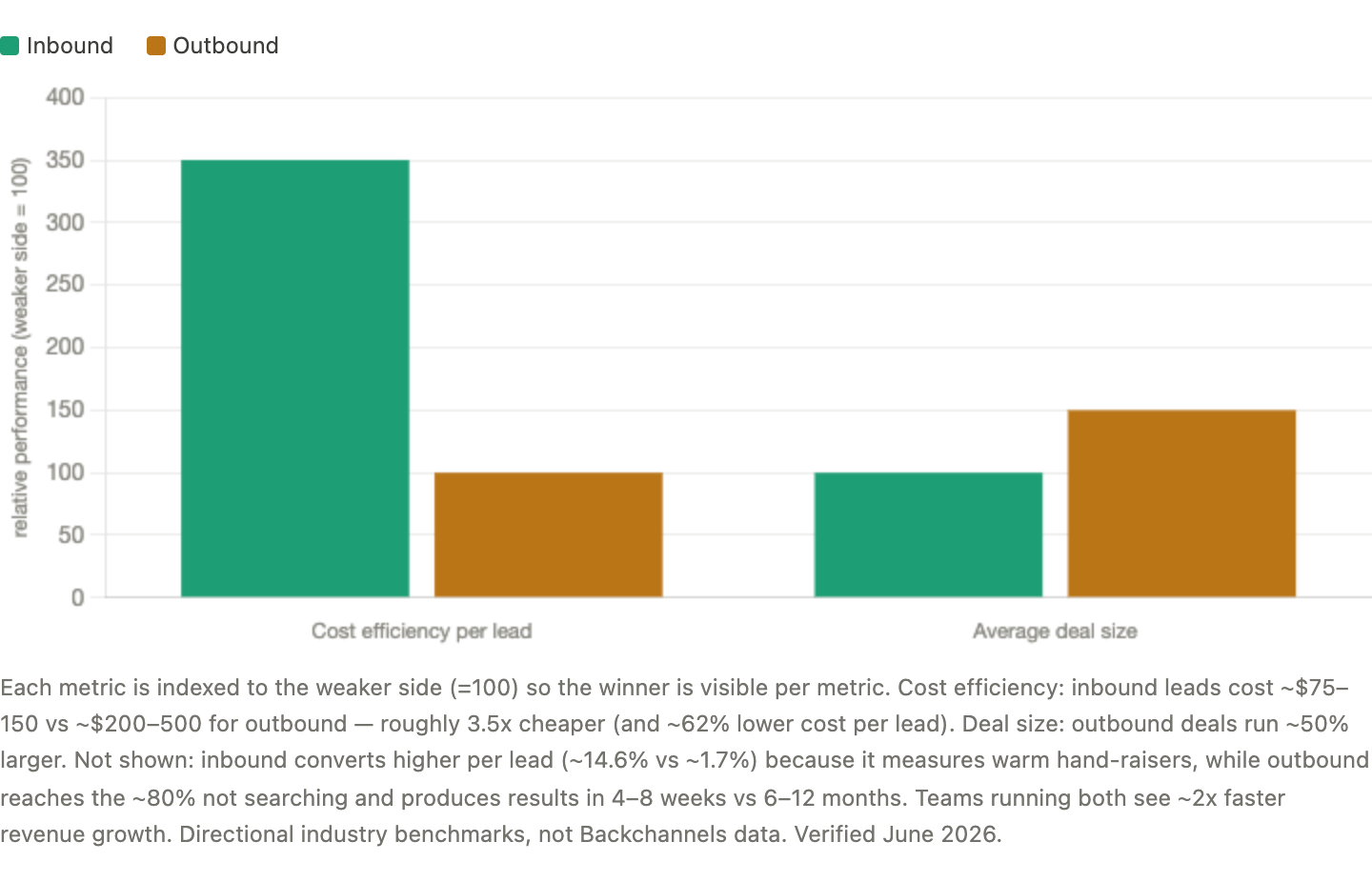
Because they're complementary, the highest-performing teams refuse to choose: companies mixing outbound and inbound achieve 2x the revenue growth of inbound-only organizations. The modern pattern is "allbound" outbound creates the spark, inbound nurtures the journey, and signals connect the two.
How to do outbound well
Outbound's reputation for being spammy comes entirely from doing it badly. Done well, it rests on a few fundamentals. First, target list quality is everything outbound lives or dies on reaching the right accounts with accurate data, and a bad list dooms even great messaging. Second, lead with context: personalized, relevant outreach far outperforms generic blasts, and cold outreach to Ideal Customer Profiles converts 30-50% higher than semi-warm leads when it's well-targeted. Third, be multichannel and persistent combine email, calls, and social, and follow up the 5+ times most deals require. Fourth, trigger on signals: reaching out when an account shows intent or a trigger event dramatically outperforms cold timing, because intent-triggered outbound converts at 2-3x the rate of blind cold outreach.
That last point is where Backchannels fits the outbound motion directly. Outbound's biggest failure modes are bad data and bad timing reaching the wrong accounts, or the right ones at the wrong moment. As a buyer database with buying signals, Backchannels gives you an accurate, ICP-matched target list and shows which of those accounts are showing intent or trigger events right now, so your outbound lands on the right accounts at the moment they're most receptive.
Frequently asked questions
What is outbound sales?
A proactive sales approach where the seller initiates contact with prospects who haven't expressed interest via cold email, cold calls, LinkedIn, and similar channels to start conversations and create demand.
What's the difference between inbound and outbound sales?
The difference is who makes the first move. In outbound, the seller reaches out to the buyer. In inbound, the buyer finds the seller (through content, search, or referrals) and reaches out first.
Is outbound or inbound sales better?
Neither is universally better they're complementary. Inbound has higher per-lead conversion and lower cost; outbound delivers larger deals, faster results, and reaches buyers who aren't searching. Teams running both typically grow about twice as fast as single-channel teams.
What are examples of outbound sales?
Cold emailing a list of target accounts, cold calling decision-makers, sending personalized LinkedIn outreach, and account-based outbound campaigns triggered by signals like funding or new hires.
Is outbound sales dead?
No. Generic, untargeted outbound is dying, but targeted, signal-driven, multichannel outbound remains a backbone of B2B pipeline SDR-generated outbound still produces a large share of total pipeline for most companies.
TRY BACKCHANNELS FREE
Your next customers are already in the database.
Backchannels gives you 225,000 verified software decision-makers. Filter to your exact ICP, preview matches for free, and push them straight into Salesforce or HubSpot. Pay per contact. No subscription, no contract.
Browse contacts freeNo credit card. Preview before you spend a credit.
No items found.
Final Thoughts
Published
September 23, 2026
Writer
Joe Backchannels
Share


Most Wanted

12 min read

12 min read

June 2026