.png)
The Backchannel
What is a sales pipeline (and how is it different from a sales funnel)?
Featured Blog


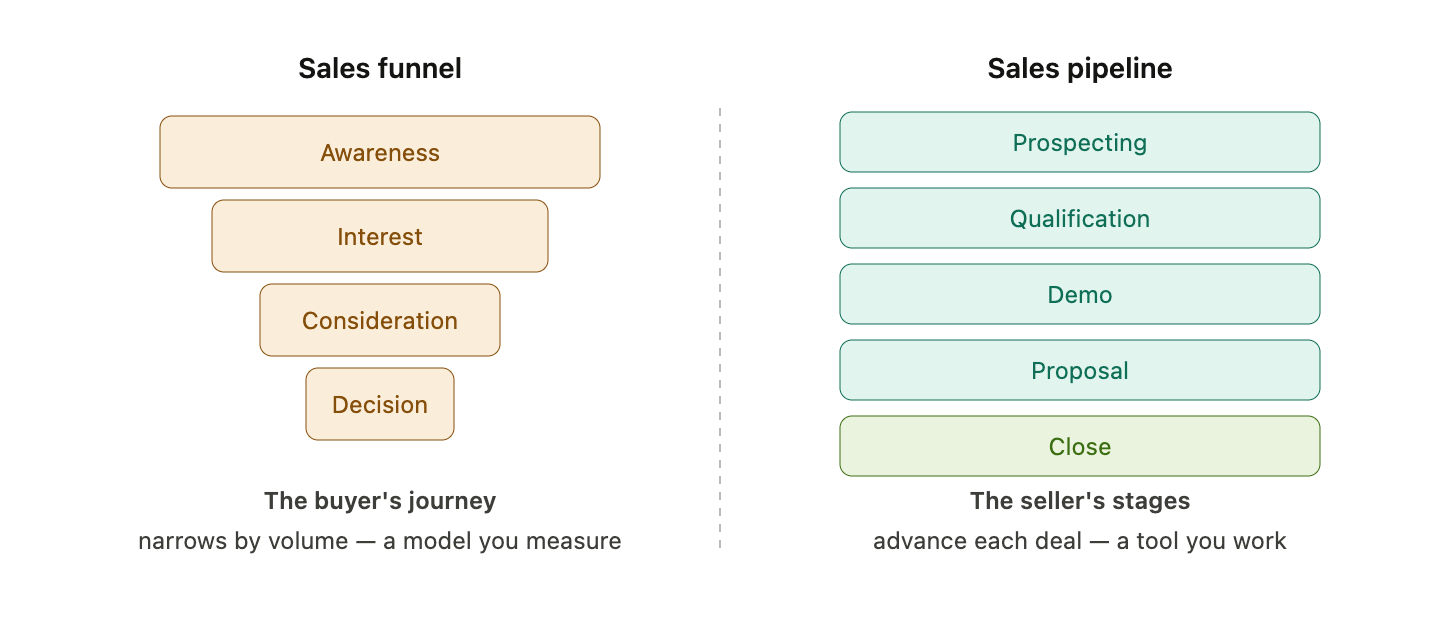
A sales pipeline is a visual, stage-by-stage representation of where every active deal stands in your sales process from first contact through to a closed deal. Each stage (prospecting, qualification, demo, proposal, negotiation, close) represents a step a rep takes to move an opportunity forward, and the pipeline shows exactly how many deals sit at each step and what needs to happen next.
A sales funnel describes something related but distinct: the buyer's journey as it narrows from a large pool of potential customers down to a few who actually buy. The funnel is about volume and conversion many leads enter at the top (awareness), and progressively fewer remain at each stage (interest, consideration, decision).
The simplest way to hold the difference: a pipeline is the seller's operational view of deals and the actions to advance them; a funnel is the buyer's journey viewed as narrowing volume. They describe the same revenue motion through two different lenses one is a tool you work in your CRM, the other is a model you measure.
Sales pipeline vs. sales funnel: the key differences
The stages of a sales pipeline
While the exact names vary, most B2B pipelines run through a recognizable sequence. Prospecting identifies and reaches potential customers. Qualification confirms an account is a real fit with budget, authority, need, and timeline. Discovery and demo dig into the prospect's problem and show the product solving it. Proposal puts forward pricing and terms. Negotiation works through objections and procurement. And closing brings the deal to won (or lost). Simpler, faster motions might use five stages; complex enterprise deals with procurement, legal, and security gates might use seven to ten. The key is that each stage has clear exit criteria a buyer milestone that must be met to advance rather than deals moving forward "on vibes."
Pipeline metrics and why they matter
The reason the pipeline-vs-funnel distinction matters in practice is that it's how you diagnose where revenue leaks. Tracking conversion stage by stage shows exactly where deals fall out. Here's what a healthy B2B funnel looks like in practice, starting from 1,000 leads.
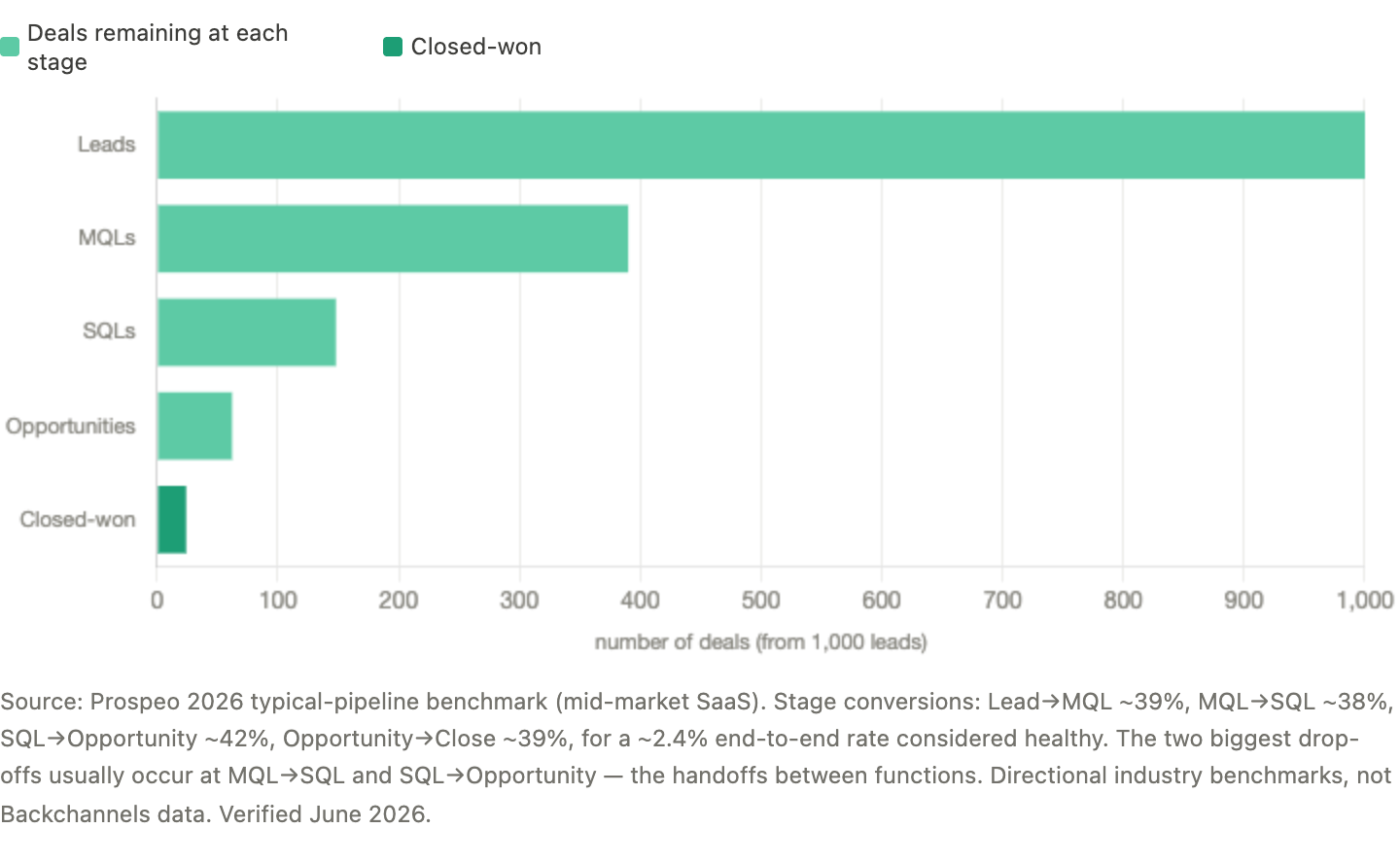
The other metric every pipeline depends on is coverage ratio whether you have enough open pipeline to hit quota. The old rule of thumb is 3x (three dollars of pipeline for every dollar of target), but that's only right if you win about a third of your deals. In reality, the average B2B win rate is 21% across all opportunities and 29% for qualified opportunities, which means most teams need more. The honest version of the rule: required coverage is roughly 1 divided by your win rate, so enterprise teams typically need 3–5x and high-velocity SMB teams 2–3x. The leverage is real but easy to miss a 15% improvement at three stages can almost double pipeline revenue without adding a single new lead.
How to manage a healthy pipeline
A healthy pipeline comes down to a few disciplines. Keep enough qualified opportunities flowing in to clear your coverage ratio but don't pad it with junk, because unqualified deals inflate every stage below them and hide the real problems. Enforce exit criteria at each stage so deals advance on evidence, not optimism. Clear out zombie deals opportunities with no engagement for 45–60 days so coverage reflects reality. And calibrate your coverage target to your actual win rate rather than a generic 3x. The thread running through all of it: pipeline health depends on the quality of what enters the top, not just the volume.
That top-of-pipeline quality is exactly where Backchannels fits. A pipeline can only convert as well as the accounts entering it, and the most common failure mode is filling it with poor-fit leads. As a buyer database with buying signals, Backchannels helps you put genuinely qualified, in-market accounts into the top of the pipeline companies that match your ICP and are showing signals of being ready to buy so your stage conversion rates and coverage rest on real, winnable deals.
Frequently asked questions
What is a sales pipeline?
A visual, stage-by-stage view of where every active deal stands in your sales process from prospecting through qualification, demo, proposal, and close showing what's needed to move each opportunity forward.
What's the difference between a sales pipeline and a sales funnel?
A pipeline is the seller's view of individual deals moving through process stages. A funnel is the buyer's journey viewed as narrowing volume (awareness → decision). The pipeline is an operational CRM tool; the funnel is a conversion model. They describe the same motion from different angles.
What are the stages of a sales pipeline?
Typically prospecting, qualification, discovery/demo, proposal, negotiation, and closing. Simple deals may use five stages; complex enterprise deals may use seven to ten, with each stage defined by clear exit criteria.
What is a good pipeline coverage ratio?
The classic benchmark is 3x pipeline-to-quota, but that assumes a ~33% win rate. A better rule is roughly 1 ÷ your win rate so enterprise teams often need 3–5x and SMB teams 2–3x. Only count qualified opportunities.
Where does the biggest drop-off happen in a B2B funnel?
Usually at the MQL-to-SQL and SQL-to-opportunity transitions the handoffs between marketing and sales often because leads that aren't truly sales-ready get passed along.
TRY BACKCHANNELS FREE
Your next customers are already in the database.
Backchannels gives you 225,000 verified software decision-makers. Filter to your exact ICP, preview matches for free, and push them straight into Salesforce or HubSpot. Pay per contact. No subscription, no contract.
Browse contacts freeNo credit card. Preview before you spend a credit.
No items found.
Final Thoughts
Published
September 28, 2026
Writer
Joe Backchannels
Share


Most Wanted

12 min read

12 min read

June 2026