.png)
The Backchannel
What is a buyer database (and how is it different from a CRM)?
Featured Blog

A buyer database is an external, continuously updated database of companies and the people who work at them typically enriched with firmographics, verified contact details, and buying signals used to find and prioritize potential customers you don't yet have a relationship with. It's the system you reach into to answer "which companies should we be selling to, and which are in-market right now?"
A CRM (customer relationship management system) answers a different question. It stores and manages the relationships you already have your accounts, contacts, deals, notes, and activity history. A CRM is your system of record for the pipeline you're actively working; a buyer database is your source for discovering and prioritizing new accounts to add to it. One looks outward at the whole market; the other looks inward at your book of business.
The two are complementary, not interchangeable and confusing them is a common, expensive mistake. A CRM full of accounts is only as useful as the data inside it, and that data decays fast. A buyer database is what keeps the top of the funnel full of fresh, accurate, prioritized accounts.
Buyer database vs. CRM: the key differences
What's in a buyer database, and how it relates to your CRM
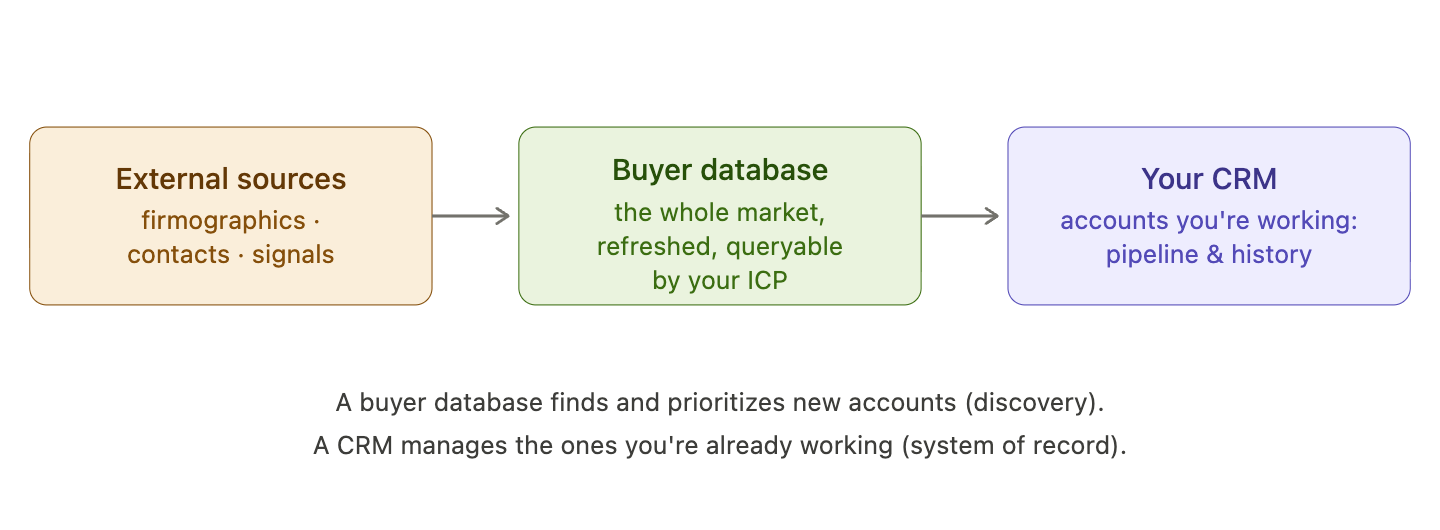
A buyer database pulls from many external sources to build a continuously refreshed picture of the market, which you then query by your ideal customer profile and feed into your CRM and outreach tools.
Why it matters: the data-decay problem
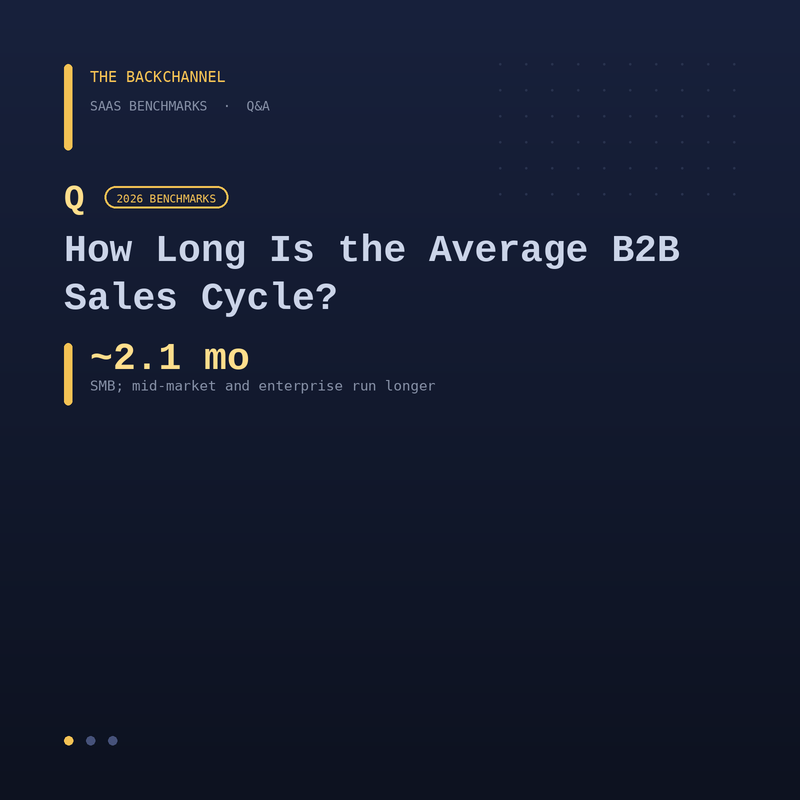
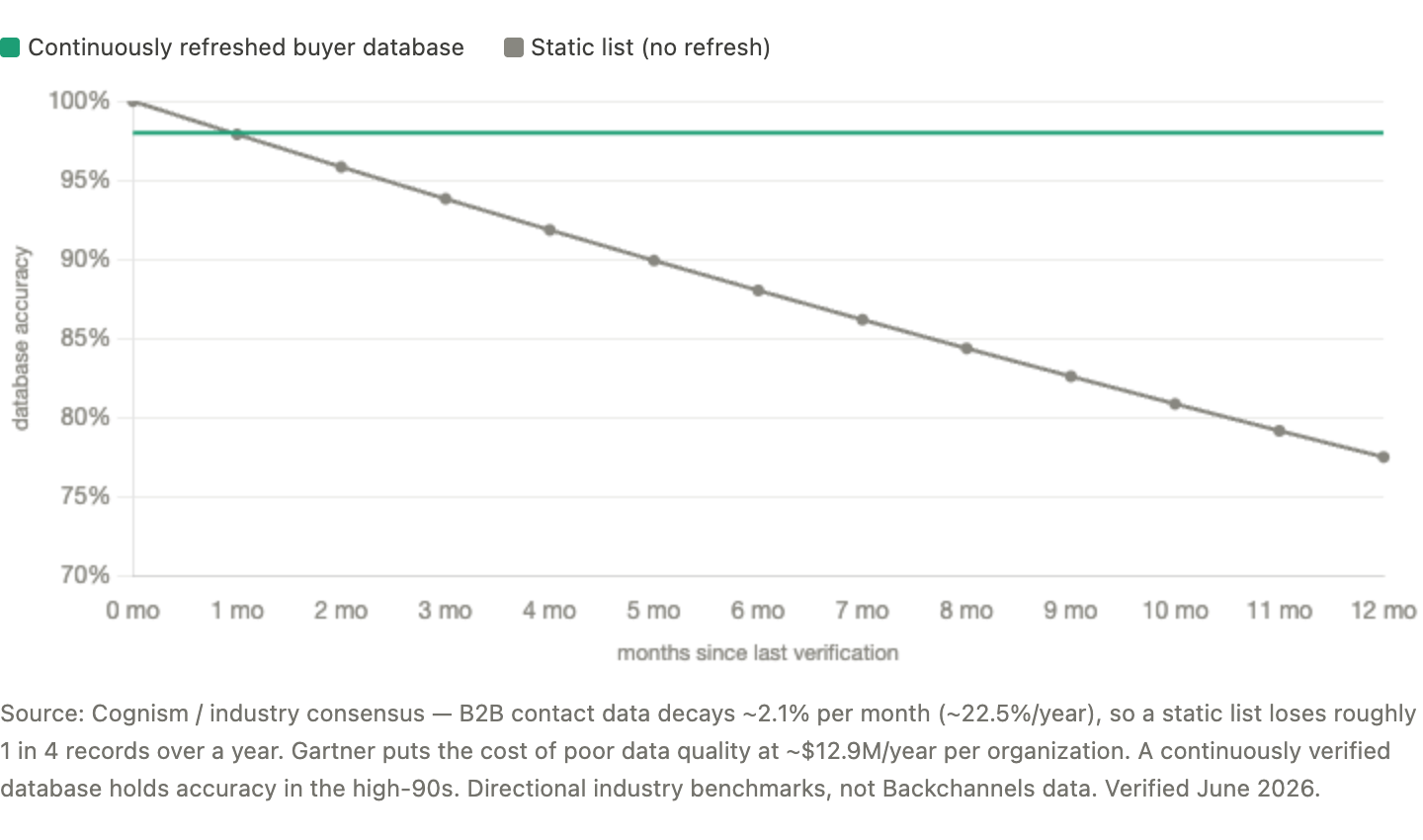
The single biggest reason a buyer database and a CRM aren't interchangeable is that CRM data rots. The moment a record is entered, it begins going stale people change jobs, companies merge, titles change, emails bounce. The decay is faster than most teams realize: B2B data decays at 2.1% per month, or 22.5% annually. This means roughly 1 in 4 records in your CRM becomes inaccurate every year without active data maintenance. The driver is simple human mobility the average B2B contact changes jobs every 18 months, and roughly a third of professionals change roles each year.
That decay is expensive. Poor data quality costs organizations an average of $12.9 million annually, reps burn enormous time working around it by one estimate, sales reps spend 27.3% of their time dealing with inaccurate data and 44% of companies report annual revenue losses exceeding 10% directly tied to CRM data issues. A CRM left to its own devices doesn't just stop helping; it actively misleads.
This is the structural difference a buyer database addresses: rather than a static snapshot that degrades, it's continuously re-verified. The chart below shows what that looks like over a single year a static list quietly losing about a quarter of its accuracy, versus a continuously refreshed database holding steady.
Source 1, Source 2, Source 3, Source 4
How to use a buyer database alongside your CRM
The two systems work best in a loop. Start in the buyer database, not the CRM: define your ideal customer profile, then query the database to surface the companies that match including ones you've never touched. Layer buying signals on top to see which of those matches are showing intent or trigger events right now. Push the prioritized accounts and verified contacts into your CRM and sequencing tools, where your reps actually work them. Then let the database keep the records current re-verifying contacts, catching job changes, and flagging when a champion moves so your CRM stops quietly rotting. Continuous enrichment solves data decay by replacing static database snapshots with dynamic, always-current records.
The mental model: the buyer database is how you find and prioritize; the CRM is how you manage and track. One keeps the top of the funnel full and fresh; the other runs the deals already in motion.
This is exactly the role Backchannels plays. It's a buyer database with buying signals built in a continuously refreshed view of the companies in your market, queryable by your ICP, layered with the funding, hiring, leadership, and intent signals that tell you who's worth contacting now. It fills and prioritizes the top of your funnel, then feeds clean, current, well-timed accounts into the CRM where your team closes them.
Frequently asked questions
What is a buyer database?
An external, continuously updated database of companies and their employees usually enriched with firmographics, verified contact details, and buying signals used to find and prioritize potential customers you don't yet have a relationship with.
What's the difference between a buyer database and a CRM?
A buyer database helps you find new accounts to sell to; it's external, market-wide, and continuously refreshed. A CRM helps you manage relationships you already have; it's internal and maintained by your team. A buyer database feeds prioritized accounts into the CRM.
Can't I just use my CRM as a database of buyers?
Not really a CRM only contains accounts you've already added, and that data decays at about 22.5% a year. It can't surface net-new in-market accounts or keep itself current. A buyer database does both.
Why does CRM data go stale so fast?
Mainly job changes. With contacts changing roles roughly every 18 months and about a third of professionals switching jobs annually, emails bounce, titles go wrong, and mapped buying committees become fiction at a compounding rate of about 2.1% per month.
Do I need both a buyer database and a CRM?
Yes, for most B2B teams. They do different jobs: the buyer database handles discovery and prioritization (top of funnel), and the CRM handles pipeline and record-keeping (managing deals). Together they form the loop.
TRY BACKCHANNELS FREE
Your next customers are already in the database.
Backchannels gives you 225,000 verified software decision-makers. Filter to your exact ICP, preview matches for free, and push them straight into Salesforce or HubSpot. Pay per contact. No subscription, no contract.
Browse contacts freeNo credit card. Preview before you spend a credit.
No items found.
Final Thoughts
Published
September 22, 2026
Writer
Joe Backchannels
Share


Most Wanted

12 min read

12 min read

June 2026