.png)
The Backchannel
We Sent 10,000 Cold Emails and Here's What Actually Got Replies
Featured Blog

Why We Did This
Most cold email advice is based on opinion. Someone tries something once, it works, they write a blog post about it. Someone else tries the same thing, it doesn't work, they write a contradictory blog post. The result is a landscape of conflicting takes, each backed by anecdote rather than data, each confidently presented as the definitive truth about what works in outbound email.
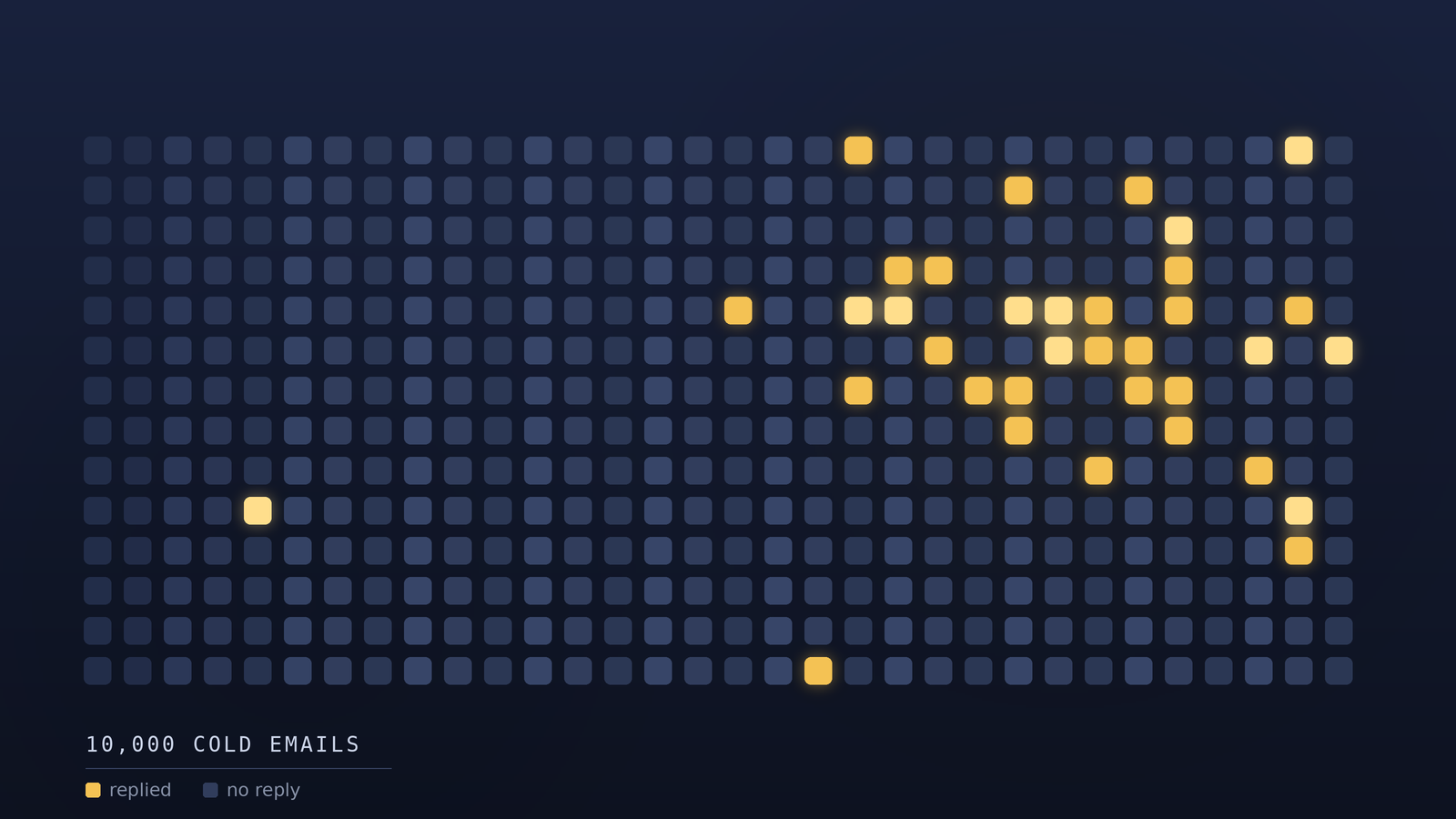
We got tired of it. So last quarter, we ran a structured experiment across 10,247 cold emails, 14 separate campaigns, and a target audience of SaaS decision-makers at companies with 50 to 500 employees. We tested the variables that matter most subject lines, openers, CTAs, send timing, personalization depth, and email length and we tracked everything: open rates, reply rates, positive reply rates, and what happened downstream in the sales process with the replies we did get.
This post is the full report. Nothing is held back. We're sharing what worked, what didn't, what surprised us, and what we'd do differently. The goal is to give you something more useful than another opinion piece data you can actually build strategy from.
How We Set It Up
Before getting into findings, a few notes on methodology, because the setup matters enormously when you're trying to draw actionable conclusions from email data.
Every email in the experiment went to contacts who matched our ICP: decision-makers in sales leadership, marketing, or RevOps roles at B2B SaaS companies. We didn't mix ICP and non-ICP contacts, which would have muddied the results considerably. Every sequence ran for the same number of touches five over the same 21-day window. We used a single sending infrastructure across all campaigns and actively managed deliverability so domain reputation wasn't a confounding variable.
Most importantly, we set a minimum sample size of 500 sends per variant before drawing any conclusions. This eliminated the danger of small-sample flukes that plague most email testing. Some findings we're reporting here represent tests run across 2,000 or more sends per variant. The patterns held consistently as sample sizes grew, which is the signal that something is real rather than noise.
We measured three metrics for each variant: open rate, total reply rate, and positive reply rate. That last metric positive reply rate, meaning replies that expressed genuine interest rather than opt-outs or polite rejections is the one we weighted most heavily in our analysis. It's the metric that actually predicts pipeline, because an email that generates a lot of "not interested" replies is not a high-performing email. It's a high-interruption email, and there's a meaningful difference between the two.
We also tracked downstream conversion for every positive reply meetings booked, opportunities created, deals advanced so we could evaluate whether campaigns that generated higher reply rates were also generating higher-quality conversations. This turned out to matter more than we expected.
What Didn't Work: Busting the Myths
Start with the disappointments, because they're the most instructive findings in the entire experiment.
Hyper-Personalization at Scale
We built what we believed were genuinely impressive personalized emails. Not the fake kind where you merge in a first name and call it personalized the real kind. We referenced recent LinkedIn posts by the prospect. We cited their company's latest press release or funding announcement. We mentioned a conference talk they'd given, a podcast they'd been on, a thought leadership piece they'd published. For each of these emails, a real human spent 15 to 20 minutes doing research before writing.
The open rates were solid 45% on average for this approach, meaningfully higher than our baseline. But the reply rates were almost indistinguishable from our generic, well-written templates. Total reply rate: 8.1% for hyper-personalized versus 7.9% for well-crafted but non-personalized. Positive reply rate: 2.8% versus 2.6%. Statistically meaningless difference. The juice was not worth the squeeze at scale.
Our interpretation: buyers can tell when they're receiving a well-crafted email, but they don't necessarily care that you did research on them specifically. What they care about is whether the email is relevant to a real problem they have right now. A well-written email that nails the pain point converts just as well as a deeply personalized email that nails the same pain point, because the relevance is coming from the pain identification, not from the name-drop or the LinkedIn reference.
Practical implication: save deep personalization for your highest-value accounts the 20 or 30 dream accounts where 20 minutes of research is clearly justified by potential deal size. For volume outreach, invest that research time into deeply understanding your ICP's pain points and writing emails that speak precisely to those pains. The leverage is in the pain insight, not the personalization theater.
Long Emails With Lots of Value
The "give value before you ask" principle is everywhere in sales content. We believed it. We wrote 300-word emails that contained a relevant industry statistic, a specific observation about the prospect's likely challenge, and a clear ROI case for our solution. We were genuinely proud of these emails. They were good writing.
They also underperformed our short emails by a factor of 2.5x on positive reply rate. The short emails under 100 words, single pain point, single CTA consistently won, in every segment, at every deal size, across every vertical we tested.
The reason, we believe, is cognitive load. A long email signals work before the recipient has decided whether to engage. When a busy VP sees an email that requires 90 seconds to read before they know what's being asked, their brain registers it as a demand. A short email that gets to the point immediately respects their attention. It signals that you understand their time is limited and that you're not going to waste it. That signal of respect, counterintuitively, builds more credibility than a paragraph of pre-qualified value ever could.
Fake Video Thumbnails
We'd seen this tactic recommended in several outbound playbooks: embed an image that looks like a video thumbnail with a play button, driving curiosity clicks and breaking the visual pattern of text-only emails. We tested it because several peers swore by it.
Open rates went up by about 6%. Reply rates went down by about 15%. Our best interpretation: people clicked on the thumbnail expecting a video, found there was no video, and felt deceived. Even if the deception was minor and unintentional on our part, it introduced a small but real friction into the relationship. The first impression became one of a trick rather than a genuine communication, and that's a difficult hole to climb out of in the subsequent sentences of the email.
We won't be doing this again. Trust is the currency of cold outreach, and gimmicks spend it before you've had a chance to earn it through the actual content of what you're saying.
Leading With Social Proof
We tested opening emails with customer logos and names: "We work with teams at Salesforce, HubSpot, and Gong to solve X." The hypothesis was sound: social proof should build immediate credibility and reduce the natural skepticism a cold email faces.
Instead, it made emails feel like marketing materials. Buyers pattern-matched on the format within the first few words "this looks like an ad" and disengaged before reading the actual message. Social proof works well inside the sales cycle, after you've established a conversation and the prospect is evaluating your claims. As the opening line of a cold email, it reads as positioning rather than communication, and positioning triggers the same mental filters that banner ads trigger. You've been categorized before you've had a chance to say anything real.
What Actually Got Replies
Now the substance. Five findings that changed how we approach outbound, all backed by data across thousands of sends to a well-defined audience of real B2B buyers.
Finding 1: Name the Pain in One Sentence
Our highest-performing email across the entire experiment started like this: "Most sales leaders I talk to are spending 30% of their week cleaning bad contact data instead of actually selling is that something you're dealing with?"
That's the entire opening. No preamble, no fake rapport, no statement about why we're reaching out, no company introduction. Just a direct articulation of a real, specific pain delivered as a genuine question. This template generated a 12.4% positive reply rate across 600+ sends nearly four times our overall average of 3.1%.
The mechanism: when you name a pain that someone is actually experiencing, they feel seen. The response isn't "who is this person?" it's "how do they know this about my situation?" That feeling of being understood is the most powerful thing a cold email can create, and it doesn't require research on the individual prospect. It requires a deep understanding of your ICP's daily reality, distilled into a single, precise, resonant sentence.
The discipline required: resist the urge to elaborate immediately. The second sentence of most cold emails explains why the pain matters, offers context about why it's common, or presents a solution. Don't do any of that. Ask if the pain is relevant to them right now and then stop. The question does more persuasive work than any explanation or solution framing that follows it.
To find your version of this sentence, go back to your last 15 discovery calls. What do your best customers say the problem was before they found you? Use their exact language, not the marketing language you've developed to describe it. The verbatim customer language almost always outperforms the polished version.
Finding 2: Subject Lines Under Four Words Win
We tested subject lines from two words to eighteen words across every campaign in the study. The pattern was consistent enough to treat as a rule: shorter wins, every time. Subject lines under four words outperformed longer subject lines in every segment, at every deal size, and across every vertical we tested.
Our top performers: "Quick question, [First Name]" (64% open rate, verified), "Intro from [Mutual]" (61%), and a one-word subject line "Thoughts?" that hit 58% in the campaign where we tested it. Subject lines over eight words underperformed our average by 31% across the board.
The longer a subject line is, the more it resembles marketing copy, and marketing copy gets filtered at the subject line level by buyers who receive high volumes of outreach. A four-word subject line that creates just enough curiosity or personal recognition to earn an open is doing its job perfectly. A twelve-word subject line that tries to preview the email content, establish credibility, and hint at a benefit is trying to do too much in a space where brevity is the only real advantage you have.
The counterintuitive lesson: your subject line should not describe your email. It should create enough curiosity, familiarity, or specificity to earn the open. Once they're inside the email, your opener does the real persuasive work.
Finding 3: Make a Tiny Ask
We tested CTAs across a spectrum from large commitments to very small ones. "Would you be open to a 30-minute demo where I can show you exactly how we'd approach your situation?" performed worst. "Worth a 10-minute call?" performed significantly better. "Can I send you one paragraph about how we'd solve this?" performed best of all in several of our test segments.
The pattern is obvious in retrospect: smaller asks convert better because they require less commitment from someone who doesn't yet know whether you're worth their time. But the magnitude of the effect surprised us. Moving from "30-minute demo" to "10-minute call" more than doubled our conversion on that CTA element alone. Moving from "10-minute call" to "one paragraph" added another meaningful lift in the segments where we tested it.
The practical takeaway is to think about the minimum viable next step for your prospect. Don't ask for a demo when you could ask for a reply. Don't ask for a meeting when you could ask for permission to share one specific insight. Don't ask for any commitment larger than what's necessary to determine whether there's a fit. Every reduction in ask size removes a psychological barrier and raises reply probability. Once a conversation has started, you can always move toward larger commitments through the natural momentum of dialogue.
Finding 4: Send on Tuesday and Wednesday Morning
We sent identical emails on every day of the week and every time slot we could cover, segmenting carefully by recipient timezone to ensure the comparison was fair. The data was cleaner than we expected.
Monday is a graveyard for cold outreach. Emails compete with the weekend backlog, planning meetings, and the cognitive weight of restarting the week. People are in triage mode, not reading mode. Thursday and Friday are deferred: buyers mentally file things under "I'll deal with this next week" and then, reliably, don't. The weekend is obviously poor for business outreach.
Tuesday and Wednesday between 7:30am and 9:30am in the recipient's timezone were consistently our top performers across every metric we tracked. Open rates were 25-40% higher than the same emails sent on other days. Positive reply rates were 22% higher than our overall average. These numbers held across every ICP segment, company size range, and industry vertical in our dataset.
Our hypothesis about why: early Tuesday and Wednesday mornings catch buyers when they're planning their week but haven't yet been consumed by it. They're in the mode of evaluating priorities and making small decisions about where to spend attention, which makes them more receptive to something that addresses a real business problem. By Thursday, their week is full and new inputs register as additions to an already-heavy load rather than as opportunities.
This is operationally simple to act on. We now batch our highest-priority sequences to send Tuesday morning, with Wednesday as the secondary window. It costs nothing to implement and produces measurable performance improvement with zero changes to the email content itself.
Finding 5: The P.S. Line
This one surprised us more than any other finding in the experiment. Adding a casual, human P.S. line at the bottom of otherwise identical emails increased our reply rates by an average of 18% across all test groups. The specific line that performed best: "P.S. If the timing's off, totally fine happy to reconnect next quarter."
Why does a throwaway line at the bottom of an email move the needle by 18%? Our interpretation runs deeper than it might seem. The P.S. signals humanity in a channel that buyers have learned to associate with automation. It tells the reader that there's a real person behind the email one who understands that not every moment is the right moment, who isn't going to be offended if they don't reply immediately, who is treating this as a genuine communication rather than a scheduled outreach execution.
That signal of humanity disarms defensiveness in a way that nothing else in the body of the email can, precisely because it comes after the pitch. When you've finished making your case and then explicitly offer the person a graceful out, it reads as authentic confidence rather than strategic psychology. A sender who's willing to say "totally fine if this isn't the moment" is a sender who believes in what they're offering and isn't desperate for this particular reply. Confidence is attractive in cold outreach the same way it's attractive in every other context.
The P.S. also implicitly sets up a legitimate reason for future follow-up. "Happy to reconnect next quarter" isn't an empty phrase it's a small, implicit commitment to a follow-up conversation when the timing might be different. Prospects who aren't ready now but file the email mentally as "maybe later" are more receptive to a follow-up that references the original conversation rather than one that pretends it never happened.
The Full Data
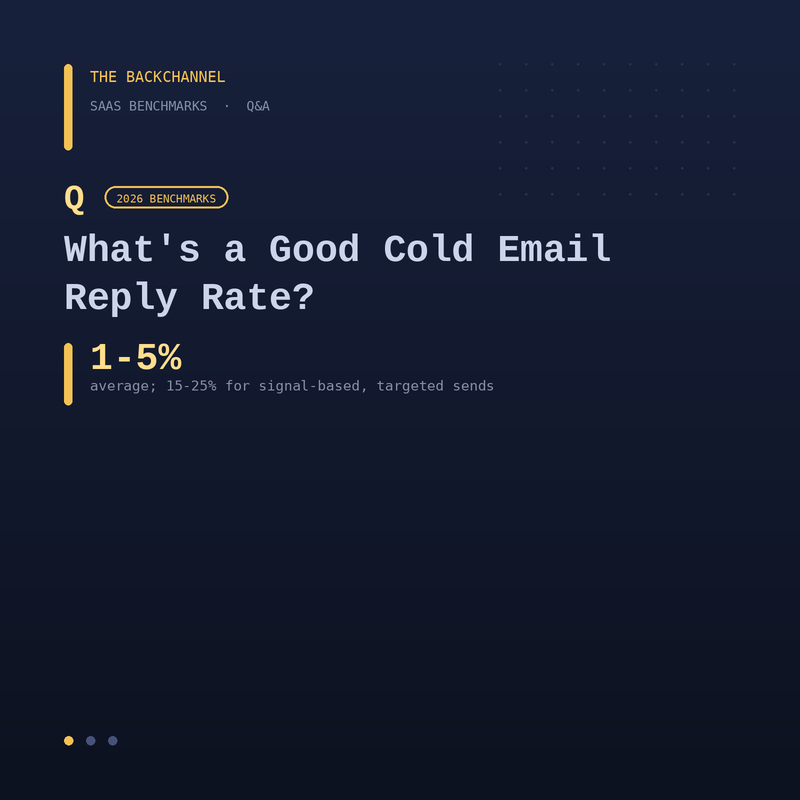
Across all 10,247 emails in the experiment: average open rate of 41%, average total reply rate of 8.3%, and an average positive reply rate of 3.1%. Our best single campaign short email, specific pain opener, four-word subject line, Tuesday morning send, one-paragraph CTA ask, P.S. line hit a 14.2% total reply rate and a 6.4% positive reply rate. Every finding in this report was present in that campaign simultaneously, and we believe the combination drove the result more than any single element in isolation.
Our worst campaign the one with the longest emails, the deepest personalization research, the most elaborate upfront value proposition, and the largest CTA ask hit a 2.8% positive reply rate. The negative correlation between effort-per-email and performance held consistently across all 14 campaigns. More work per email did not produce better results at any point in the experiment.
We also tracked downstream conversion rates by campaign. The meetings booked from our highest-performing email templates converted to qualified sales opportunities at 74%, compared to 49% from our lowest-performing templates. Higher reply rates and significantly higher downstream quality: the short, direct, human approach wins at every stage of the funnel, not just at the open and reply level.
What This Changes About How We Work
The findings from this experiment changed several things in our outbound motion not just at the tactical level, but at the level of how we think about what cold email is actually for and what it's capable of doing.
Cold email is not a vehicle for explaining your product. It's not a place to build credibility through social proof, demonstrate expertise through length, or establish relevance through research citations. It is a very small thing a knock on a door and the only job it has is to make someone curious enough to open the door and say yes to whatever small next step you're asking for. Once that door is open, everything else you want to communicate can happen in the real conversation that follows.
Optimizing cold email means optimizing ruthlessly for that single moment of curiosity and perceived relevance. The shortest possible articulation of the most specifically relevant pain. The smallest possible ask. The most human possible tone. Everything beyond those three things is, at best, neutral and at worst, actively counterproductive.
The teams consistently beating quota on outbound aren't the ones with the cleverest copywriters or the most sophisticated sequences. They're the ones who've understood this principle deeply, tested their way to precision on their specific ICP and pain point language, and built the operational discipline to execute consistently on what the data actually tells them even when it contradicts what feels intuitively right. If this experiment gives you a starting point for your own testing, and a few specific hypotheses to validate against your own audience, it's done its job. Now go test.
TRY BACKCHANNELS FREE
Your next customers are already in the database.
Backchannels gives you 225,000 verified software decision-makers. Filter to your exact ICP, preview matches for free, and push them straight into Salesforce or HubSpot. Pay per contact. No subscription, no contract.
Browse contacts freeNo credit card. Preview before you spend a credit.
No items found.
Final Thoughts
We sent over 10,000 cold emails and tracked everything obsessively. The results challenged almost every assumption we had going in. Stop optimizing for cleverness. Start optimizing for clarity.
Published
August 14, 2026
Writer
Joe Backchannels
Share


Most Wanted

12 min read

12 min read

June 2026